Is Closeness a Form of State Change? And What About Trust?
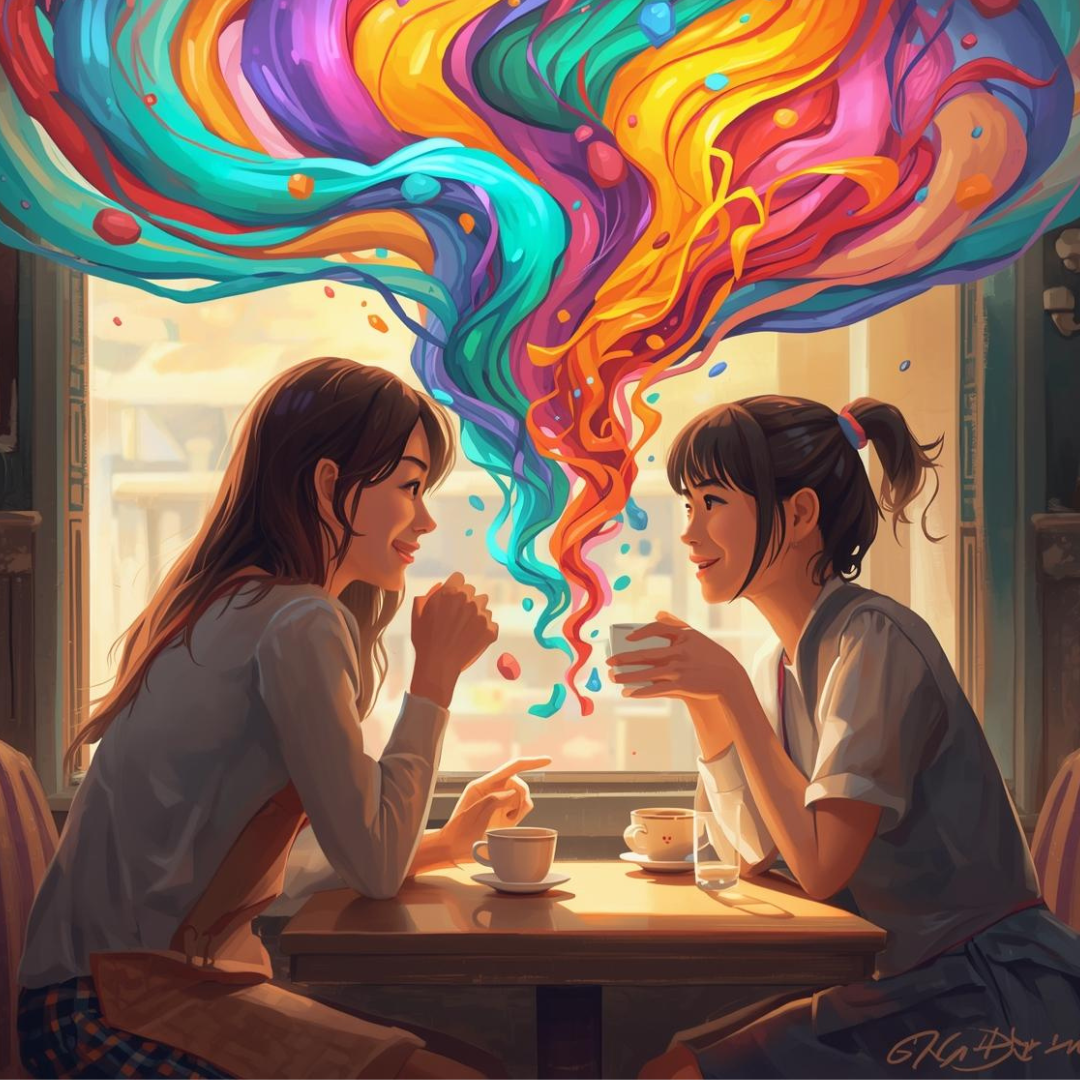
Perhaps closeness and trust are not created by how much personal information people share.
Perhaps they are created when two people successfully shift into a more open and free state together and learn that they can return there safely.
Have you ever wondered why different relationships feel different?
Why you can share certain things with your friend Diane? But you know you won’t feel satisfied if you tell the same thing to your friend Peter?
When you have something really sensitive to talk about, who do you go to? And why do you pick them? And why does it feel good sometimes but not others?
Perhaps there Is more going on then we think
Closeness Through Disclosure
Every so often the idea returns in a new form: closeness can be engineered through disclosure and “authenticity.”
One version of this idea was popularized in a New York Times piece built around the “36 Questions That Lead to Love,” based on the work of Arthur Aron.
Two strangers sit down, answer increasingly personal questions, and something shifts.
Many people who try it report the same result: they feel unexpectedly close. And there’s little doubt human beings have the ability to identify with the experience of others.
So disclosure works.
Except when it doesn’t.
Because we also know the opposite experience: we can share deeply personal information and not feel good about it.
So what is happening when disclosure does lead to closeness? And what creates an increase in trust? And why does it sometimes fail to appear?
The question is not simply about how much is revealed. The question is about what is happening in the interaction itself.
Intentional State Change Inside One Person: An Example
First, to zero in on the nebulous concept of “state change’ let’s consider a feeling shift that happens inside one person, not between two.
Most of us have probably had the experience of feeling self conscious, for example, when dancing, attending a job interview, or giving a presentation.
That internal state of doubt, awkwardness and discomfort is recognizable to most of us and feels qualitatively different from times when we feel at ease and in the flow of things.
It’s not uncommon that performers who must regularly, and reliably, produce results in movement arts or other performing arts find that shifting to a state of mind where they are not evaluating their performance as it unfolds can be one (of several) keys to obtaining better results.
An evaluative state of mind stops authenticity, spontaneity, flow and being in the moment. Responding to impulses and circumstances as they arise is more difficult in certain states of mind and emotion.
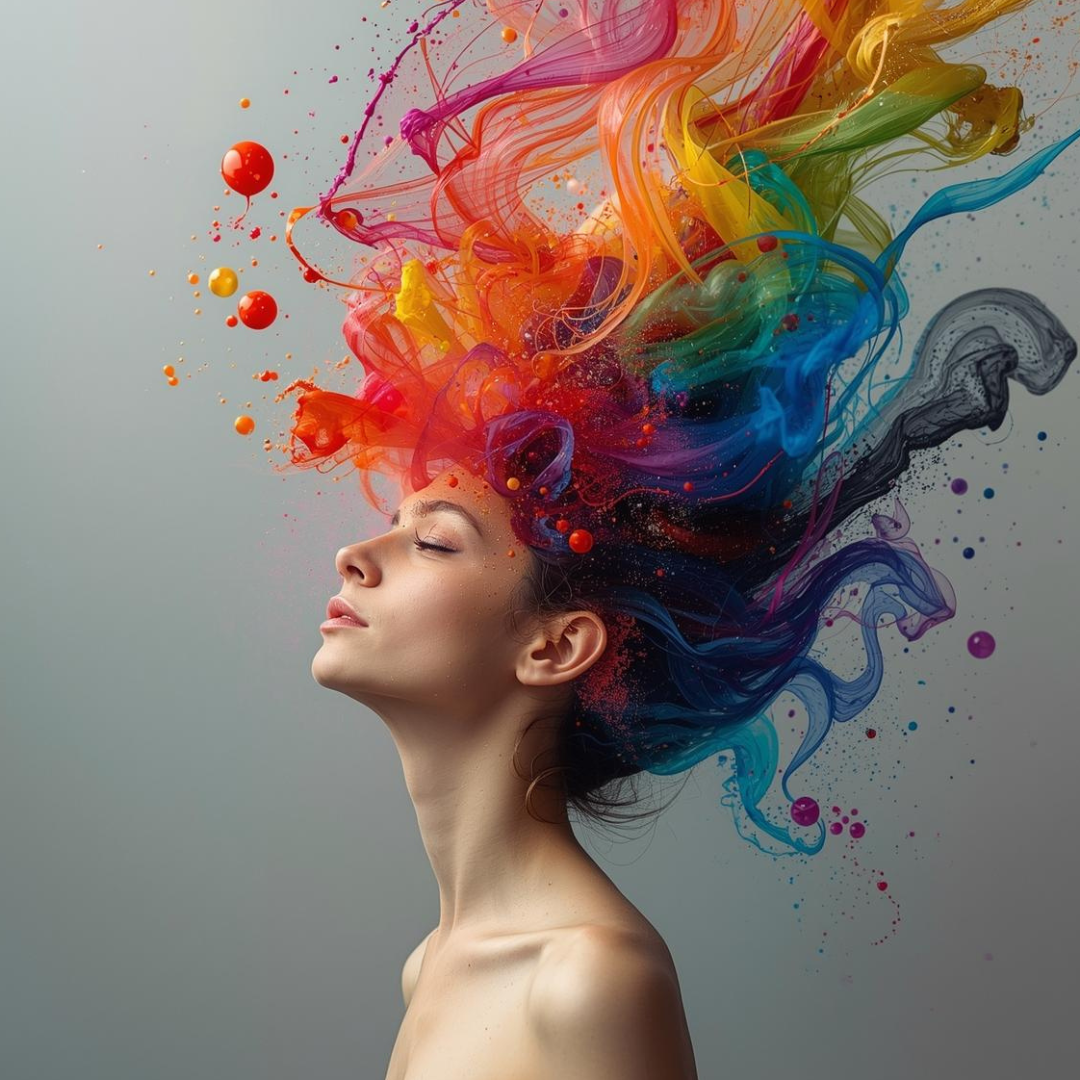
There are tricks to turn off an evaluative state of mind and enter into one where the mental focus and patterns are different.
For example, if the performer is overly aware of the audience and their reactions, it can interfere with the quality of the performance.
Hence, professional performers often learn to create “state change” to perform their art or craft.
One of the interesting aspects of this type of state change is it can not be forced, or turned on at will like a light switch.
However, a person can practice and learn to be better at “allowing” it to happen. They can get better at “entering” that state.
Being able to shift from feeling self conscious to being in a non-evaluative state of flow is part art, part skill.
With the caveat that human behavior is extremely complex, influenced by culture, personality, past trauma, cognitive biases, and randomness (to name a few), and doesn’t function like a machine that you can take apart neatly, and put back together, to understand its function, let’s take a look at a different, albeit still reductionist, model.
Relationships Don't Just Exchange Information - They Change State
If simple disclosure automatically created closeness, then:
trauma dumping on a stranger would bond people
oversharing at work would build instant intimacy
posting personal things online would reliably make people feel connected
This suggests that the important variable is not always the content of what is said.
Something else is happening.
Many things may change. Some of which might include:
Tone of voice.
Timing.
Eye contact.
The pace of speech.
Body sensations
Mental associations and ideas
There can be changes that are: physiological and attentional. And there can also be changes in the pattern(s) used to relate.
For many people the most common social pattern and mode is what we might call “functional” (which may also tend toward more superficial or guarded). Much of the time may be spent in a state, where the goal may be:
Carry out transacations
Role performance
Self protection
Low-risk conversation, or conflict avoidance
Socially trained sharing, or self-presentation
But people also have experience and familiarity with other states such as:
Quiet presence
Play
Seriousness
Emotional openness
Collaborative problem-solving
As with movement skills (for example, the martial arts) people have different levels of comfort with different states - and they have different levels of ability and ease in shifting between them.
A Different Way to Understand Sharing
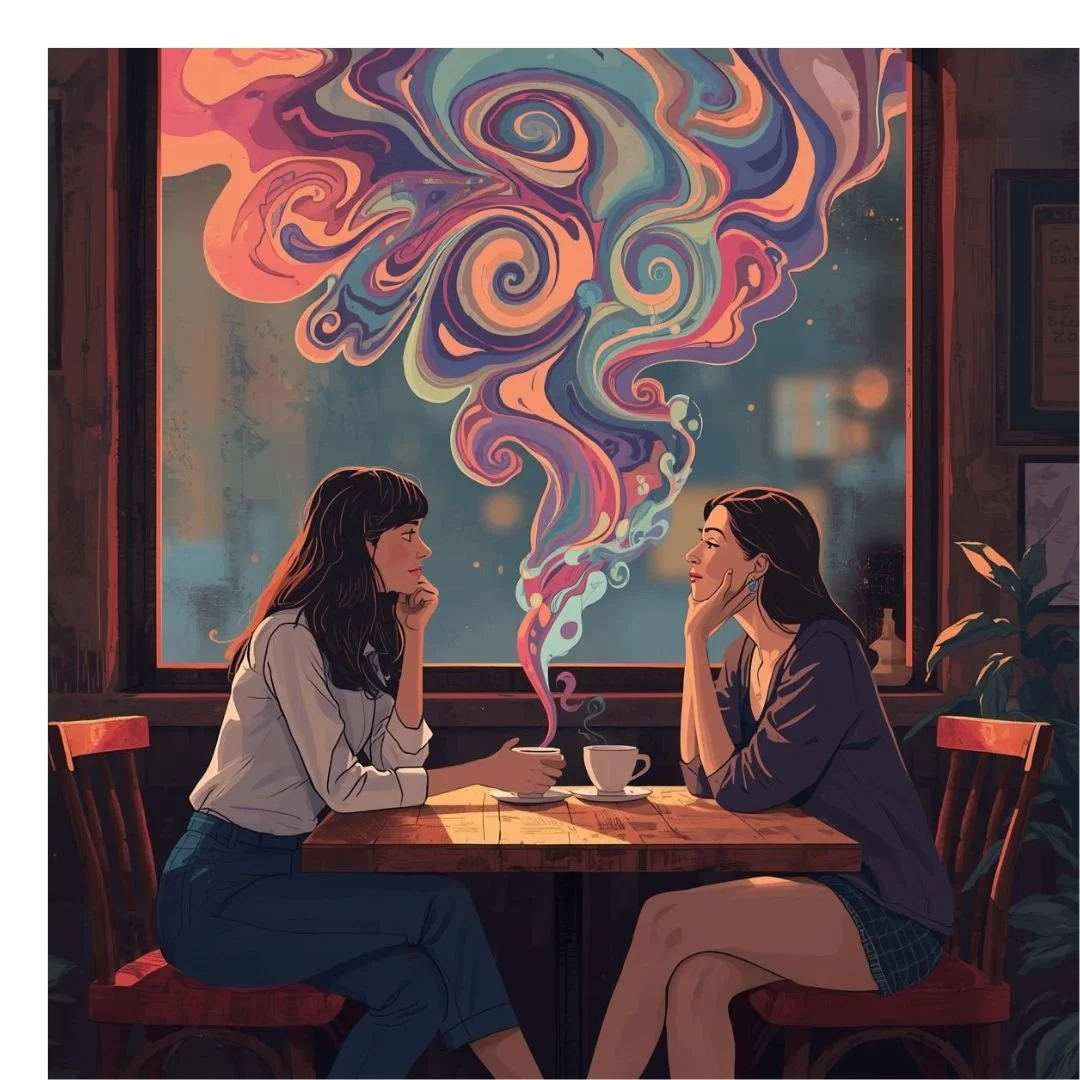
What happens when we think of sharing vulnerable emotional content not only as data exchange, but, sometimes,
simultaneously as an attempt to shift state — a mental, emotional state?
When you go to tell your friend Diane that you broke up with your significant other, you aren’t just intending to say words. You’re likely hoping for something in addition, perhaps a certain amount of greater ease.
As individuals, we already recognize many ways of changing state:
Meditation
Hypnosis
Breathwork
Exercise
Food
Alcohol and other substances
But what if we can also change states together?
The popular term co-regulation points to this.
In this way of viewing things, when someone shares something real, they are not just giving information.
They are seeking to regulate their state with the help of another.
They are trying to move the interaction from:
Self conscious protected state → flowing open state
A Different Way to Understand Trust
While deep sharing and co-regulation can happen in one off situations. It’s also true this type of sharing can happen on the regular with the same person.
In marriages
Friendships
Therapy
Religious or Self Development Groups
Empathy partners
A hallmark feature of deep sharing experience over longer periods of time, months and years, is the development of trust.
But what if, it’s not the act of sharing that creates trust, it’s the experience around the sharing.
Closeness may not come from exposure. It may come from how the exposure is received and integrated.
What actually builds the atmosphere of trust?
When someone risks sharing something real, several things are being tested in that moment:
Reception
Are they listened to?
Interrupted?
Judged?
Fixed?
Minimized?
Emotional handling
Does the listener stay regulated?
Do they get awkward and change the subject?
Do they make it about themselves?
Aftermath
Is the information treated with care later?
Is it used against them?
Is the relationship the same the next day?
Trust grows when the sharer’s nervous system learns:
“When I show more of myself here, nothing bad happens — and something good happens.”
That’s a repeated lived experience, not a single moment.
The real “bonding agent,”it’s not the vulnerability. It’s the combination of:
risk taken
care received
safety maintained over time
You could say: sharing is only the offer. Trust is built in the response.
Small, well-held moments:
“That makes sense”
“I’m really glad you told me”
remembering later and not weaponizing it
— those are what wire connection.
The Deeper Pattern
At a nervous-system level, trust is built when:
Risk → Safe landing → No negative consequence → Continued acceptance
repeats enough times.
That’s why consistency after the conversation matters as much as the conversation itself.
Trust As a Learned, Repeatable Pattern
We might say:
Trust is the learned ability to return to and move through state change in a coordinated way without renegotiating it each time.
At first the transition is deliberate and slightly unstable. Later it becomes automatic, just like a new movement pattern:
initially awkward
then repeatable
eventually available under pressure
Trust is not: We told each other everything.
Trust = the ability to return to that state
“We can enter that mode again without thinking about it”
It becomes a new automatic pattern between two people.
Why the Response Matters: Co-regulation of State
The reason you may feel that you can more easily share with your friend Diane than your friend Peter is because in shared state change:
The other person’s reaction has a strong impact on whether the new state can stabilize.
If the response is:
awkward
dismissive
problem-solving
joking away the moment
→ both people snap back to the old automatic pattern.
But if the response is:
calm
attuned
non-intrusive
consistent afterward
then the nervous system learns:
“This state is viable here.”
That is literally pattern rewiring through successful repetition, which is also what solo performers practice in craft and art.
Moving Between Modes and Patterns
In movement training, and high level performance, progress is not defined by learning one ideal technique.
It is defined by gaining the ability to move between patterns without freezing, collapsing, or becoming self conscious under pressure.
Relationally, it is the same.
Closeness is not permanent openness.
Closeness is the shared ability to move between:
functional mode
playful mode
serious mode
open mode
and remain coordinated.
It is state mobility.
And once that mobility is learned, disclosure stops feeling like a risk, because the system knows how to handle the transition.
What Are We Actually Feeling?
When we say “I feel close to this person” we are not describing the amount of personal information exchanged. We are describing the fact that a different way of being together has become available and repeatable.
Something has been trained.
Something that lives below the level of words.
Why Growth and Problem Solving Happen in an Atmosphere of Trust
If viewed from this model, trust actually is the ability to move into openness together, and back out again, without losing connection.
A repeatable coordination.
Now vulnerability becomes functional.
You can bring harder, more complex material into the space.
It can be explored instead of just discharged
It leads to understanding, change, problem-solving, pattern updates
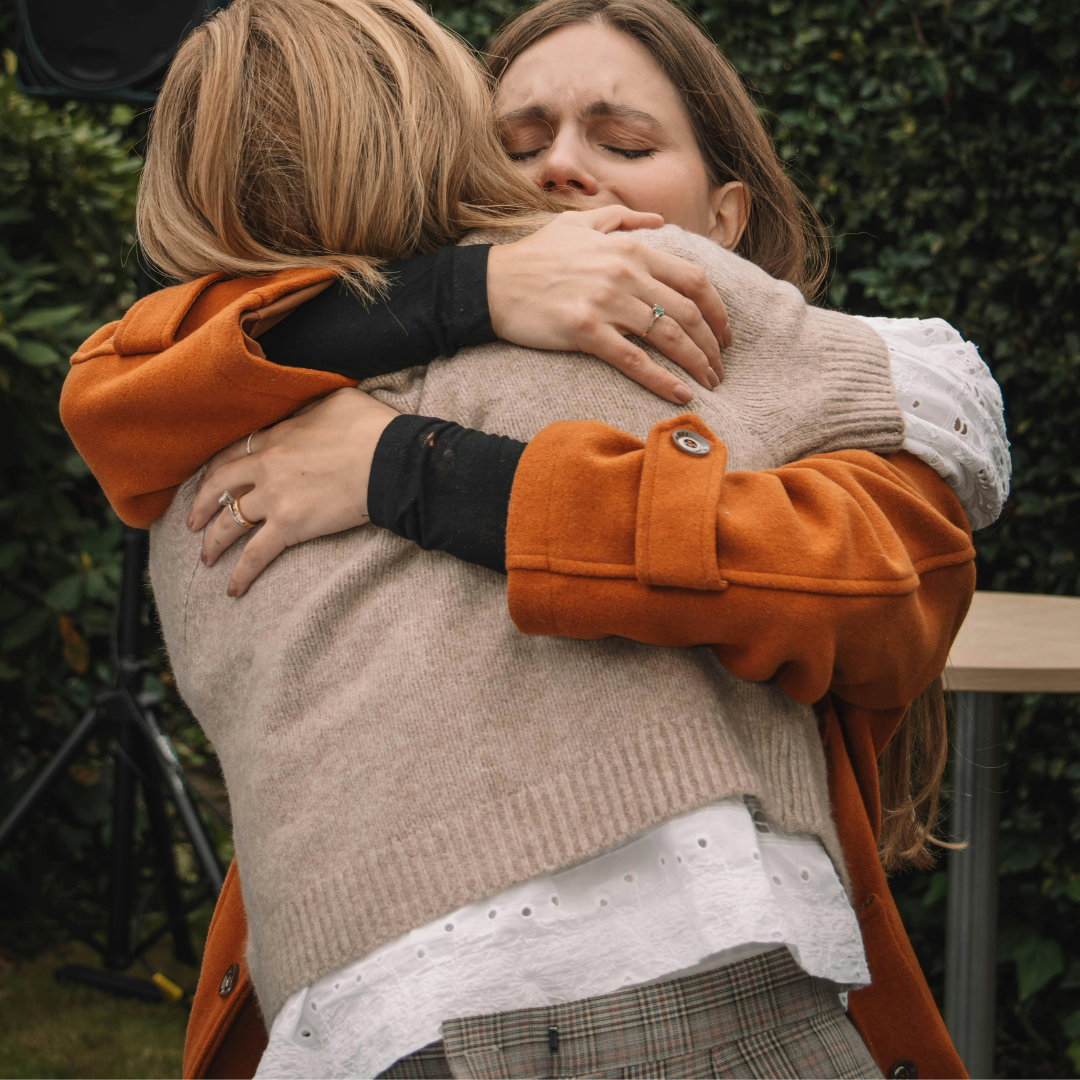
As my mother, a social worker with decades of experience once said:
“It’s in the holding where the healing happens.”
She meant that in the presence of certain felt states a different kind of shift inside people could take place.
Said another way:
Real change — in movement, mind, or relationship — happens best inside a stable, repeatable state that can tolerate variation.
Or more technically:
Human change can often be state-dependent, co-regulated, and trainable.
The Whole Model in a Few Bullet Points
Co-regulated state forms
State becomes reliable → trust
Trust allows deeper material
Deeper material can now be processed, not just revealed
Processing leads to new patterns (individually and together)
State Shift and State Stability as a Trainable Capacity
Now that we understand more about this type of state change, a natural question arises: what makes someone good at it, or how can someone get better?
Some people have more natural ability because of history, temperament, or practice, but key qualities may include:
1) Self-Regulation: Staying Present Without Defending
The biggest limiter is simple: can you remain present when something emotionally activating happens? If you:
start fixing
get overwhelmed
shut down
…you may lose the state.
2) Tolerating Uncertainty
The open state is unscripted, you don’t know what will be said, where it will go, or how it will land.
Just as a performer in a live performance can’t always predict what comes next, access to this state requires comfort with not knowing and not controlling.
Those who can maintain it show up in many domains: high-level improvisers, skilled therapists, elite fighters in fluid exchanges, and experienced coaches. They can stay coordinated under live, changing conditions.
3) Sources of Greater Access
So what gives someone more than usual access?
It’s not one thing, it could be a convergence of:
Internal capacities: emotional regulation, attentional stability, tolerance for uncertainty, separation of worth from performance
Experiential history: being received well, successful repair, environments where openness didn’t lead to harm
Practice in state shifting: meditation, martial arts, dance, endurance training, therapy, deep creative collaboration
All of these train the ability to stay coordinated while intensity changes.
An Empowering Conclusion
As with movement, the ability to shift state with another is not entirely something you are born with.
As you get reps at different patterns, and practice entering the state, losing it, re-entering it, and stabilizing it under intensity - it becomes increasingly available.
Human beings need co-regulated states because our nervous systems thrive in the presence of other regulated systems.
Deprivation and isolation harm humans in ways as serious as smoking or chronic inactivity.

True intimacy and trust don’t come from disclosure alone, but from the repeated, shared experience of shifting into open, responsive states together.
Trust and closeness may in part be a learned, repeatable, co-regulated state shift.
Like learning a movement or a craft, this capacity is trainable
Nathan Schechter, ACSM CPT, writes about the mechanics of experience — how people learn, change, connect, and perform under real conditions.
Disclaimer
The information and content provided by Mind Body Literacy and in this article is general information and is intended for educational purposes only. Individual situations vary. This content is not intended as, nor should it be used as a substitute for, professional medical or psychological advice, diagnosis or treatment. No guarantee or warranties are made with respect to the accuracy, applicability, fitness, or completeness of the content.