Protective Use of Force: What Brazilian Jiu-Jitsu (BJJ) Can Teach Us About Building Skillful Nonviolent Communication
Can Brazilian Jiu-Jitsu (BJJ) training, or something like it, help people handle real-world conflict in a way that aligns or integrates with Nonviolent Communication (NVC) principles by training a skilled calibration of protective use of force?
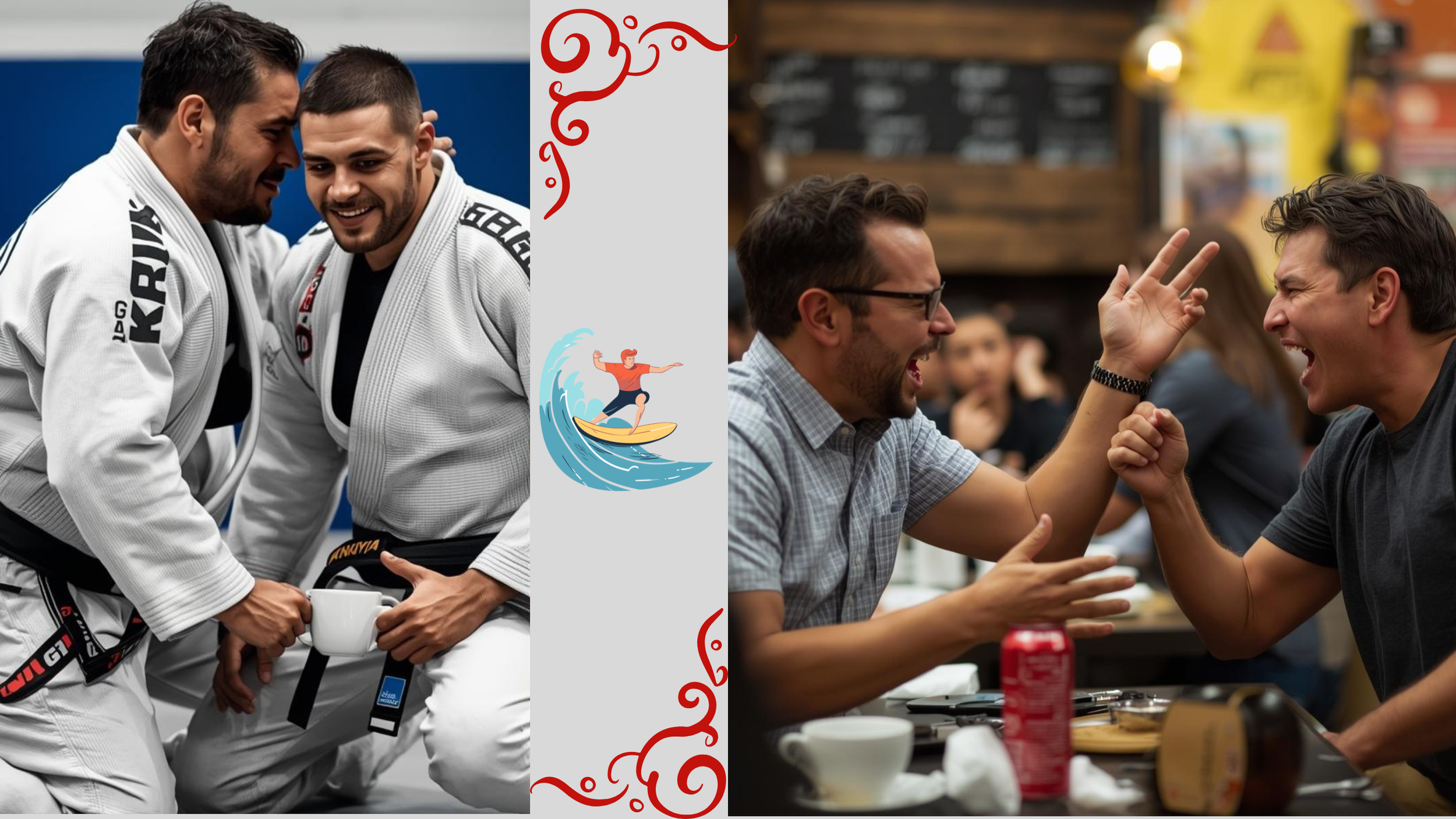
How can training prepare people to use protective use of force in real life situations?
Part 1: Training and the Protective Use of Force: BJJ is an Existing Practice for Varying Aggression and Force in Conflict While Avoiding Violence
Most people think of: force, aggression and violence as the same thing.
But, as this article points out, that is not accurate. And examining distinctions is important in skillbuilding. This article primarily takes a look at the first two: force and aggression, in order to provide examples of situations where they can be used constructively (as in BJJ training).
The founder of NVC, Marshall Rosenberg, distinguished protective use of force from punitive use of force. He indicated protective use of force was to, as the name implies, protect and not punish. Examples he gave where such force might be used included situations where dialogue wasn't possible (e.g., imminent danger) and where it was necessary to protect life or rights.
To the best of my knowledge, at this current time, NVC resources focus on theory: what protective force is, why punitive force doesn’t align with NVC, but there’s very little written about training to use protective force in verbal conflict resolution situations where the other side is not willing to cooperate.
Use‑of‑force training is much more common in Law Enforcement settings.
These sometimes focus on operational outcomes (law enforcement effectiveness, reducing excessive force) but they rarely apply those lessons to everyday interpersonal conflict or communication approaches like NVC.
BJJ serves as a bridge. It is used in both law enforcement communities and in everyday life. It is used by laypeople for recreation and by law enforcement officers for non-lethal, controlled use of force. Neither the BJJ nor LEO communities have significant NVC knowledge.
No articles that I am aware of weave the threads discussed here into a practical discussion of how skill development might be approached to improve effectiveness in unpredictable real‑world conflict where verbal exchange is the primary mechanism of conflict resolution and cooperation is absent.
Terms Used in This Article
BJJ: Brazilian Jiu-Jitsu, a martial art most similar to wrestling and grappling
NVC: Nonviolent Communication, a communication and conflict-resolution technique that seeks to create empathy, and understanding, and focus on universal human needs.
Notice about Nonviolent Communication and NVC
The statements, comments or ideas about Nonviolent Communication (NVC), and the use of both terms in this article, reflect the author’s understanding, experiences and perspectives. He is not certified by nor affiliated with the Center for Nonviolent Communication. For information, on the Center for Nonviolent Communication visit www.cnvc.org The website offers additional resources. For more information about the author visit: mindbodyliteracy.com
TL;DR
Conflict is unavoidable as it is part of life.
Force and aggression can exist without violence.
BJJ demonstrates this in a training environment.
NVC training environments are often cooperative.
A certain percentage of real-life conflicts are not cooperative.
Real world scenario: protective Use of Force with a noncooperative participant.
What does skilled conflict navigation look like when the other person refuses cooperation? How do you train for such situations?
Could NVC training borrow from BJJ training ideas about how to help people train for navigating the unpredictable flow, and variable levels of intensity, of situations where protective use of force may be necessary?
Emotional and Interpersonal Skill in Context

Emotional and interpersonal skills, including conflict resolution, are often talked about abstractly.
But abstractions cannot reliably produce skill. Focused and well-thought-out training does that. People learn through practice, coaching, and iteration.
At times both martial arts techniques and nonviolent conflict-resolution techniques must function in reality under constraints such as:
Limits of time and energy
Ambiguity
People’s non-cooperation
Prudent assessments of risk
Sensible cost–benefit analyses
In this article we will take a look at what BJJ and NVC are, as well as a problem from the real world to see how training might be used to help people practice so that they have an increased chance of acting more effectively “in the wild” (outside of training situations) in a particular type of use case scenario, one where a party is not open to cooperation.
Brazilian Jiu-Jitsu as Proof of Concept
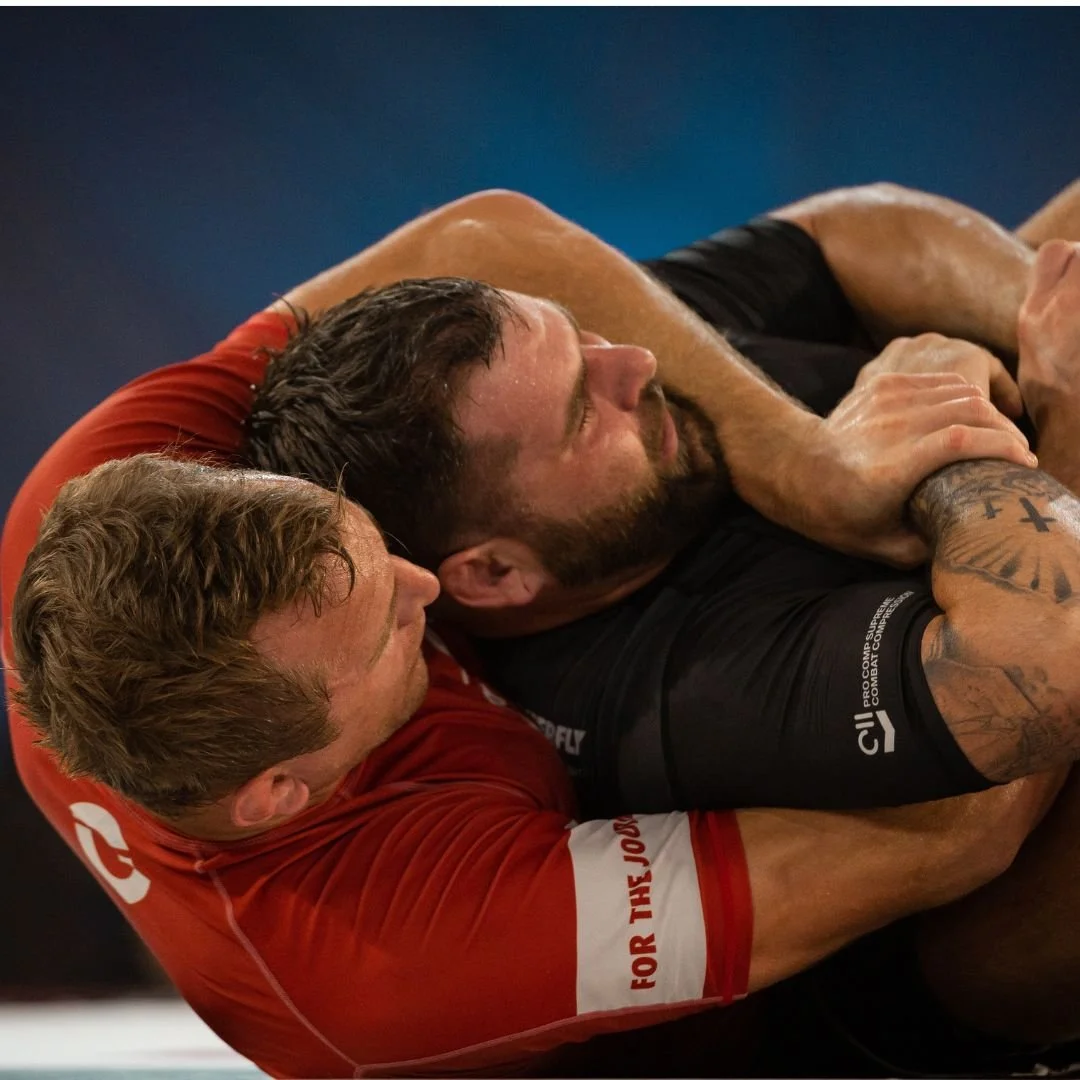
A BJJ Roll
In Brazilian Jiu-Jitsu classes, people:
apply force
try to defeat each other
apply pressure
sometimes aggressively
Yet afterward, they:
shake hands
laugh
help each other improve
The BJJ environment demonstrates clearly: force does not automatically equal violence or bad will.
It is proof-of-concept that people can “roll with each other” at various levels of intensity and pressure, oppose each other, and still walk away better, healthier and in a spirit of friendship.
This idea is not all that dissimilar to the idea in NVC that there are real benefits that can be found by entering into conflict skillfully.
Marshall Rosenberg, the founder of NVC, suggested that relationships often suffer when people rely on only two techniques - verbal attack or withdrawal - when dealing with conflict.
The third alternative requires engagement combined with skillful communication.
The BJJ Environment as Training Ground
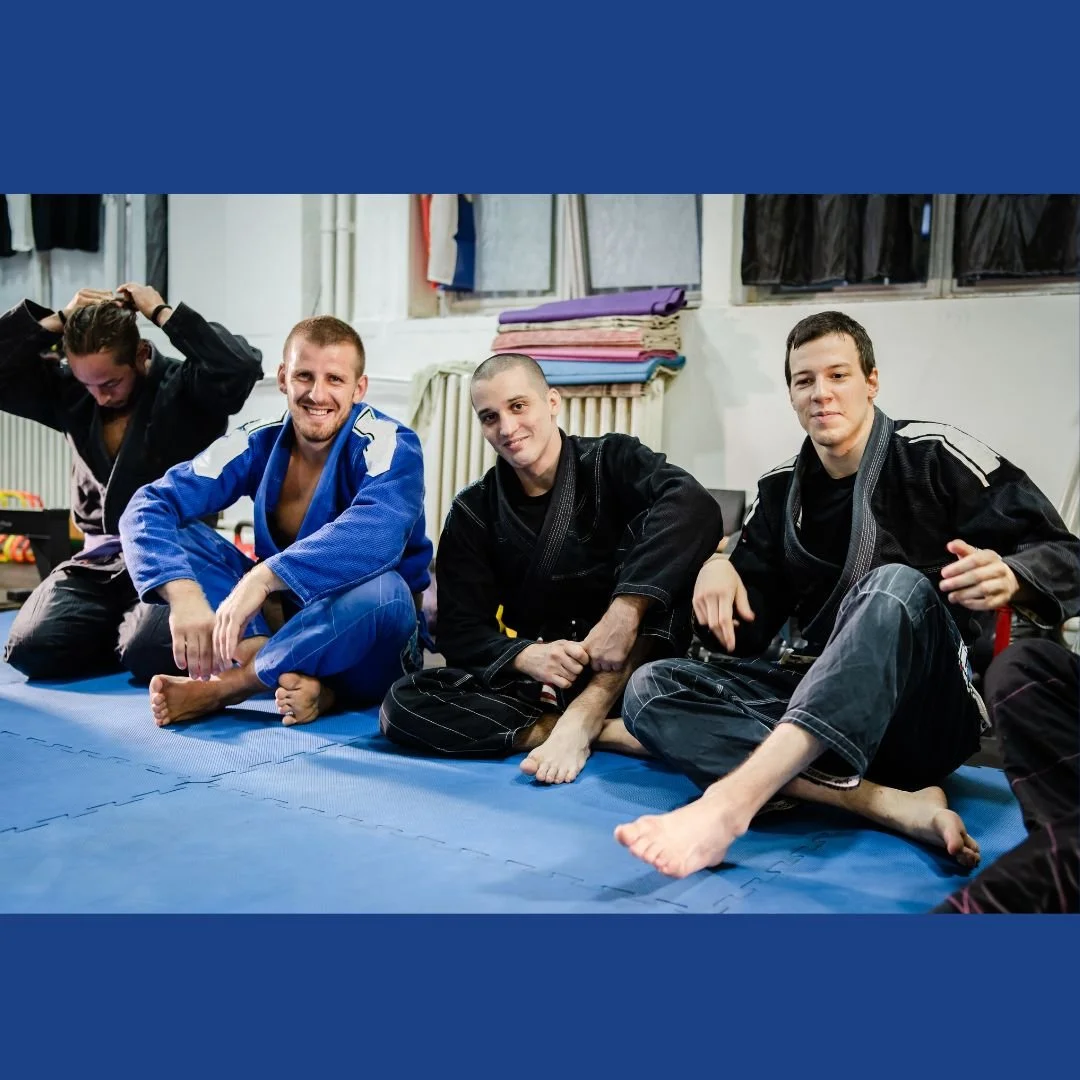
If you’ve never practiced BJJ, the social atmosphere of good grappling gyms is a bit like women talking in a quilting circle while trying to wrestle the other person into submission.
That is to say, it’s an unusual mix of casual conversation, camaraderie, learning while physically dominating each other.
And it highlights the coexistence of force + friendliness, and switching between the two in an exchange, is possible.
BJJ classes feel collaborative, fun, social, with the presence of real risk and conflict built in. Yet, people connect even while applying significant physical pressure in experiences where levels of cooperation varies greatly, moment-to-moment.
In BJJ an opponent may grab his opponent’s head and throw him to the mat, and then give helpful pointers, or crack a joke right after.
As BJJ demonstrates, a person can be forceful and aggressive without being violent or causing injury.
In fact, in good martial arts training, practitioners are taught to have an offense - not just a defense. An offense that is effective requires a certain degree of aggression. Practicing martial arts, done well, necessitates a constant evaluation of how much aggression and force should be used in rapidly shifting situations, often with various partners, most of whom are not well known to each other.
Martial arts does not see it as a contradiction to include:
Protective use of force, aggression, resistance, and competitive goals, with
rules, learning, and mutual benefit
This seeming paradox, aggression alongside friendliness, resistance mixing with periods of cooperation, may be a piece of what gives BJJ something to offer in looking at effective training for managing real-world conflict in ambiguous, non-cooperative situations.
The NVC Environment as Training Ground

Nonviolent Communication (NVC) is a verbal and emotional communication skill that tries to foster connection and understanding between people through an honest expression of feelings and needs.
.It can also be viewed as a conflict resolution skill. The goal is to create empathy and understanding of underlying needs (which are seen as universal) and to find win-win strategies through making requests so that strategies meet the mutual underlying needs of parties involved in a conflict.
Like a card game, NVC has guidelines that can be learned in a short amount of time, but which can be refined for a lifetime.
NVC eschews violence, and what are called “enemy images,” creating negative stories about others in one’s mind (unless this is done for internal relief before acting more skillfully).
And it encourages a deeper understanding of both one’s own inner reactions as well as the reactions of others by setting aside judgments and using a process of inquiry.
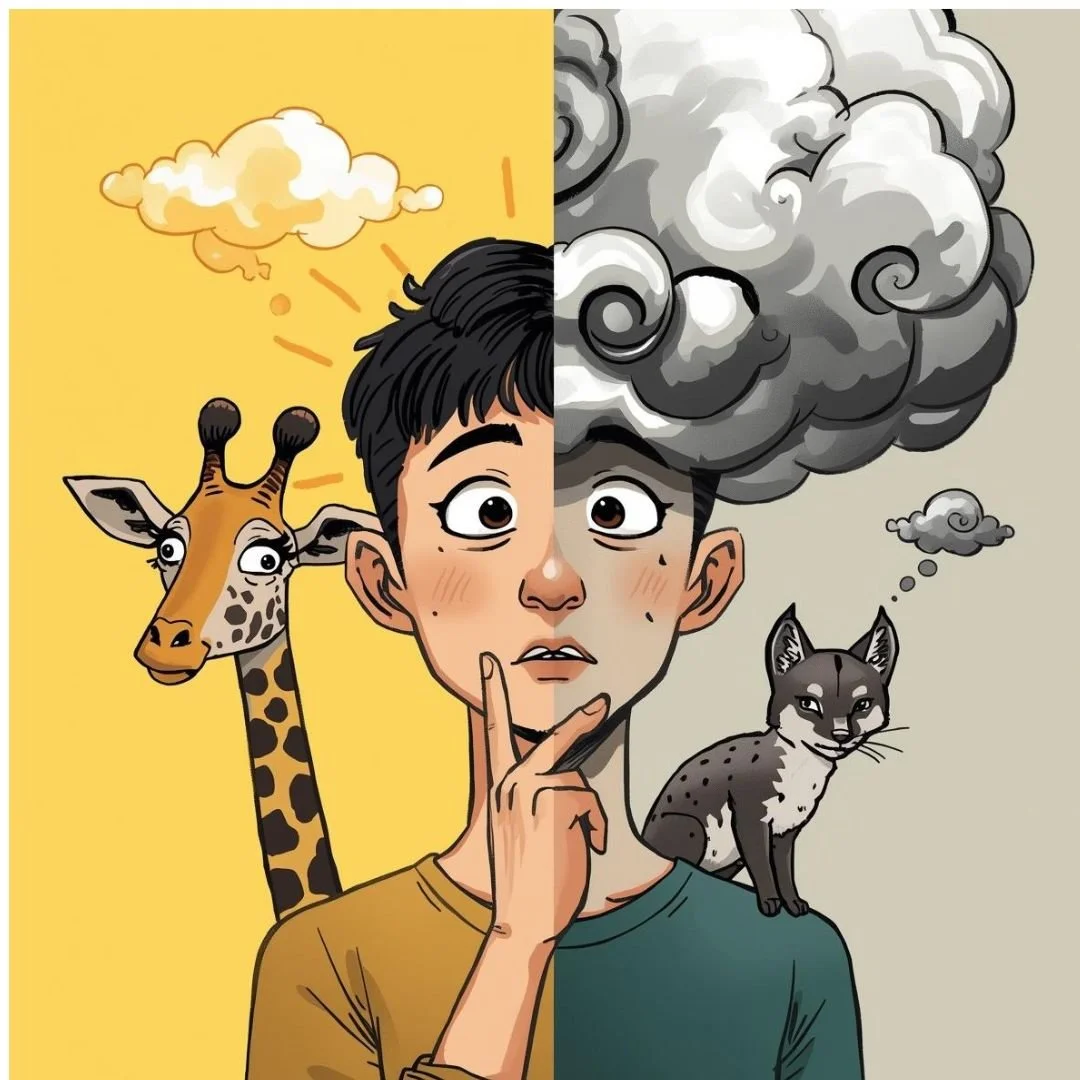
NVC uses the metaphor of animals for two states of mind.
Giraffe. And Jackal.
Giraffe is a state of mind where people:
- have perspective,
- see situations and people as fluid and changeable,
- seek to act from a big heart and toward everyone’s highest good.
Jackal is a state of mind where
- People think in terms of win / lose
- Are highly reactive
- Have negative thoughts about themselves and others
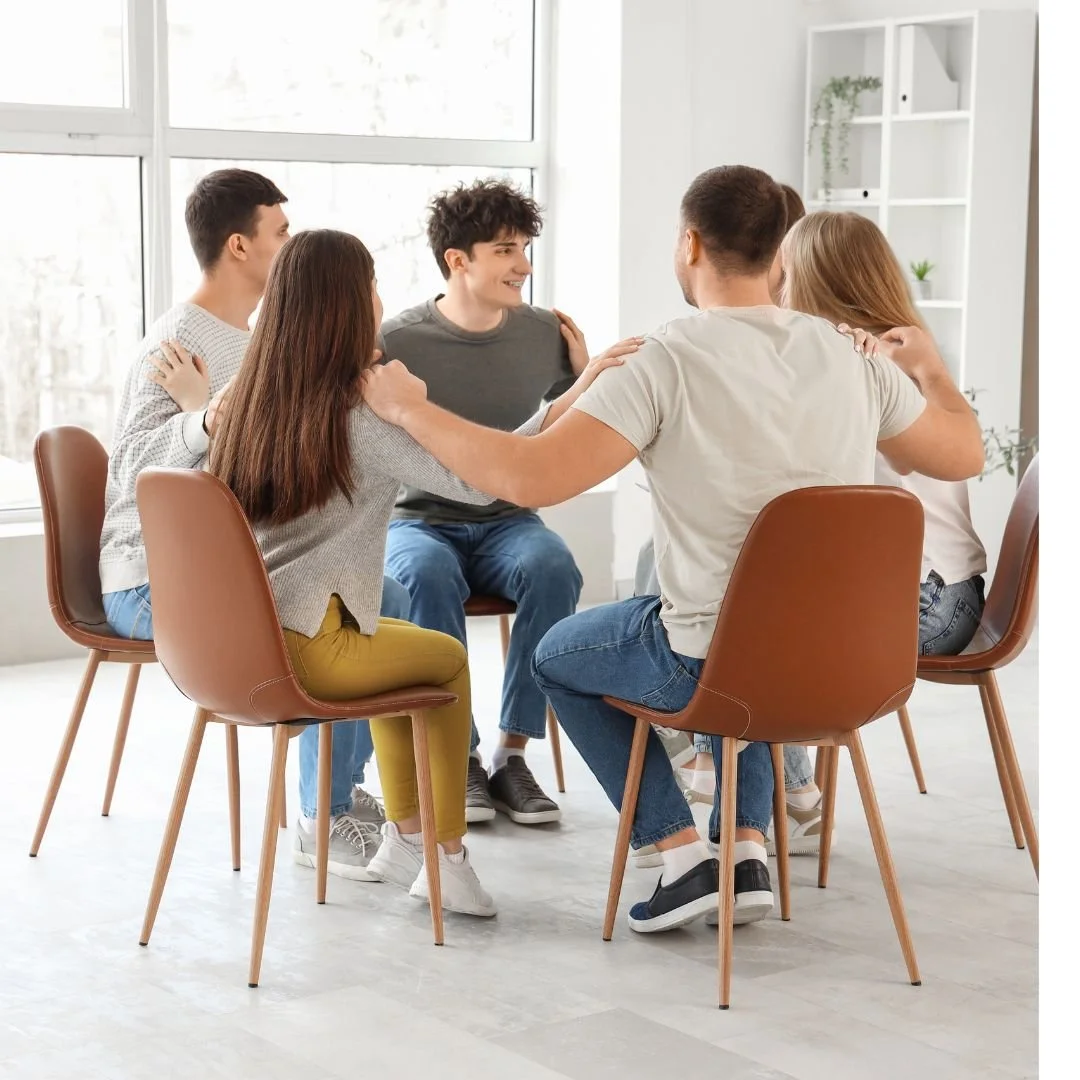
NVC is often practiced in small practice groups using conversation, facilitation and modeling of NVC techniques.
These NVC training settings tend to foster a gentle,understanding and compassionate approach. This can be quite important for many learners in the beginning.
NVC training often assumes some degree of: time, patience, and willingness to engage and cooperate.
In such groups, people often:
Express their feelings
Practice reflective listening
Make guesses about and articulate needs
Learn and discuss NVC techniques
Make requests and focus on problem solving
Not only does NVC work beautifully in practice environments, it can make significant changes in many real world relationships and conflicts even after relatively little training.
However, this article specifically focuses on situations that often unfold differently, and where the use of NVC can be more challenging, such as where there is:
Significant resistance
Limited time
Unclear intentions
Emotional escalation
Real risk
Just as with BJJ, sometimes NVC skills are called upon to be applied outside the typically safe environments in which they are learned. And for NVC to be a credible conflict resolution strategy it must be able to function in such settings as well.
Brazilian Jiu-Jitsu (BJJ)
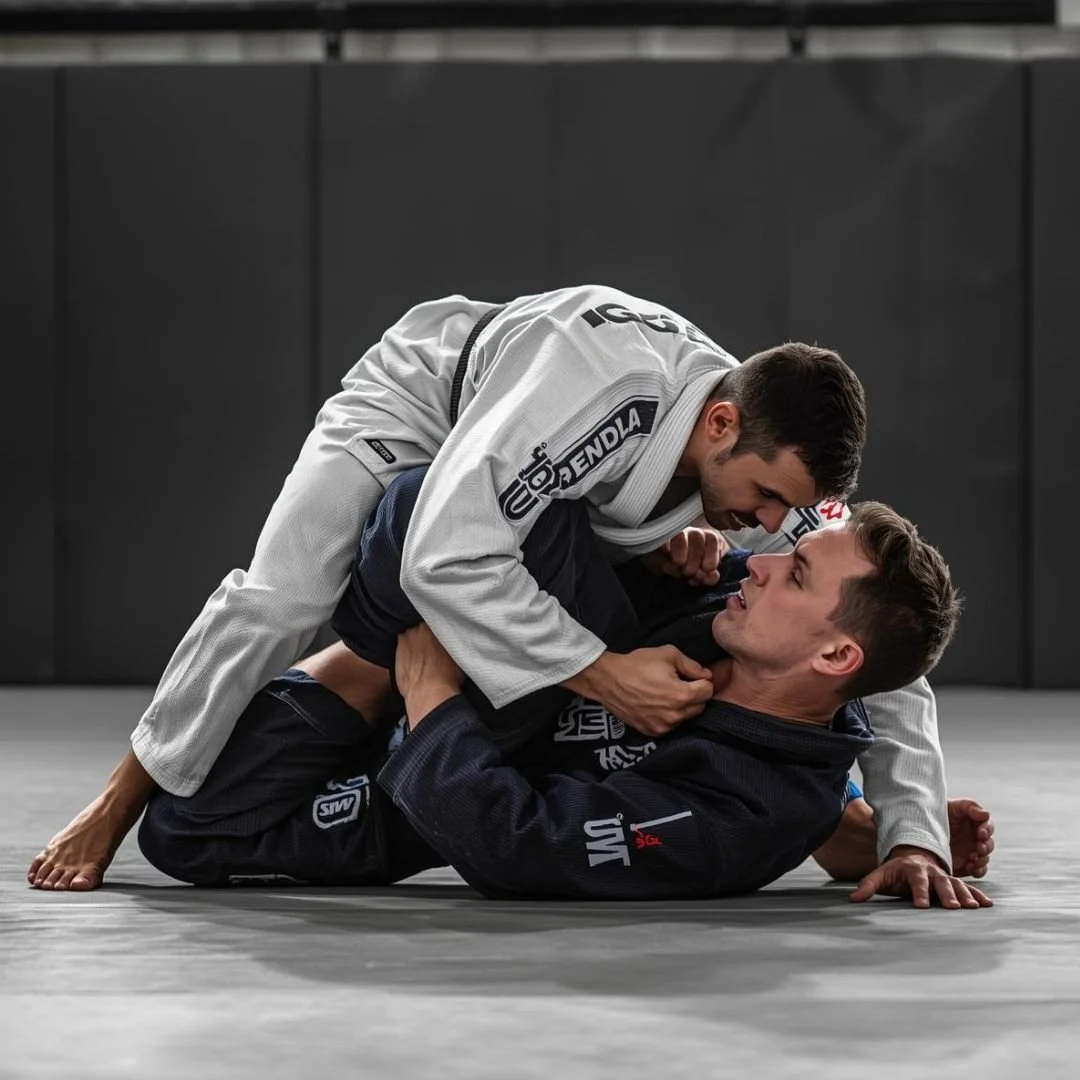
Brazilian Jiu-Jitsu began in the early 20th century in Brazil.
It was adapted from Japanese jujutsu and judo (a practice primarily focused on self development), which Mitsuyo Maeda, a Japanese judoka and martial artist, brought to Brazil around 1914.
Maeda taught these techniques to the Gracie family, particularly Carlos and Hélio Gracie, who modified and refined them to emphasize leverage, ground fighting, and submissions over brute strength.
Hélio Gracie, who was smaller and less physically strong than many opponents, became a central figure in shaping BJJ’s philosophy: technique and leverage can allow a smaller person to control and submit a larger, stronger opponent.
The Gracies opened academies in Brazil, tested the art in challenge matches, and codified it as a practical system for fighting.
Practitioners “roll,” a term for a wrestling bout, where they practice applying pressure, controlling positions, and responding to resistance in real time.
Techniques may include controlling limbs, such as arms, legs or head, executing takedowns from a standing position, and other techniques.
BJJ remained primarily a Brazilian phenomenon until the 1990s, when Royce Gracie showcased it in the early Ultimate Fighting Championship (UFC) events in the United States. His success against larger opponents using technique and ground control drew worldwide attention.
From there, BJJ schools proliferated globally, evolving into a sport, a self-defense system, and a staple of mixed martial arts (MMA) training.
Protective Use of Force: Varying Aggression and Force in Conflict While Avoiding Violence
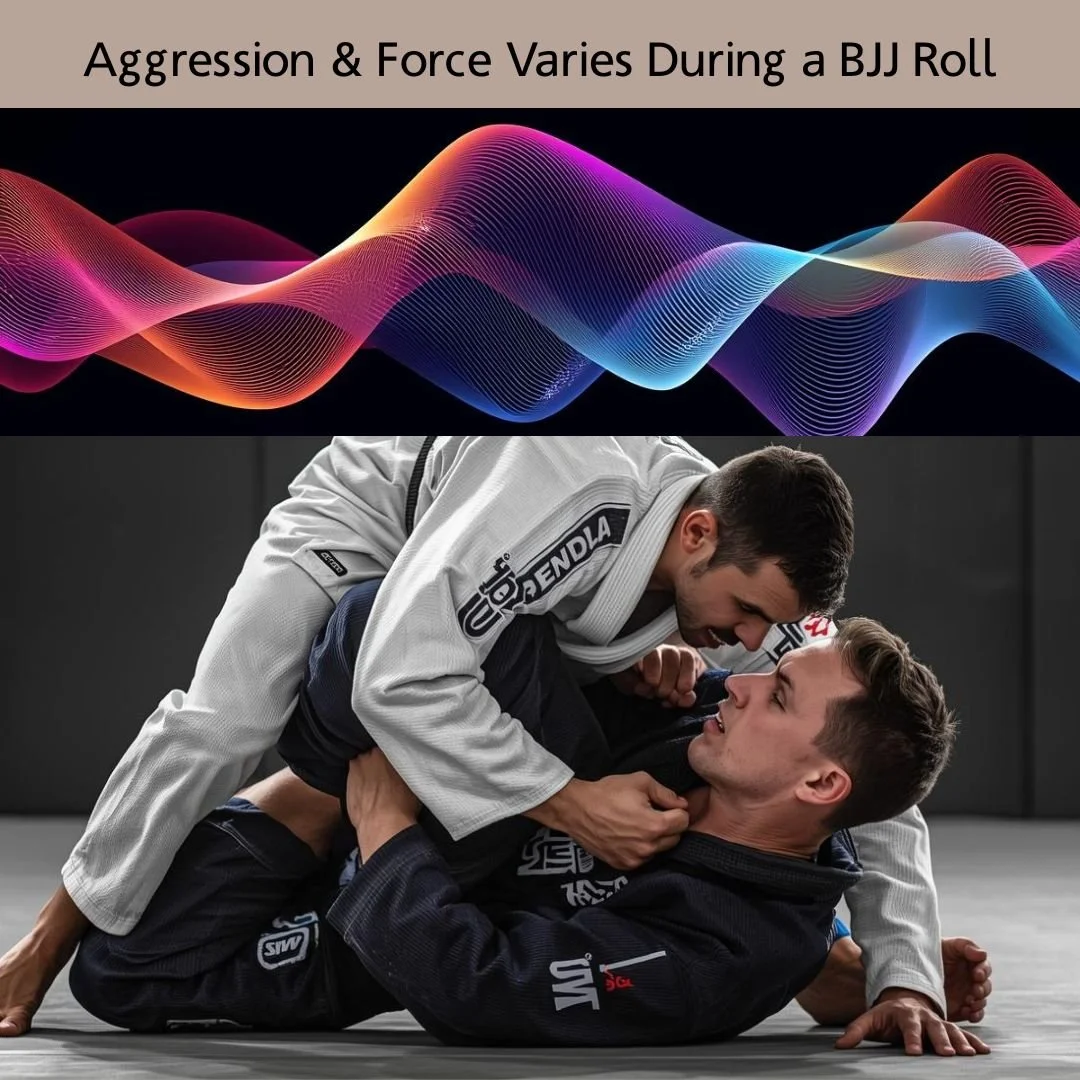
A BJJ roll
Protecting the Opponent While Using Force Against Them - BJJ as a Model
In Brazilian Jiu-Jitsu, practitioners “roll” (a term for live wrestling) to practice grappling, control, and technique in a dynamic, realistic setting.
A roll typically begins either from a standing position, like a wrestling or judo setup, or directly on the ground, depending on the gym, the goal, and the participants.
From the moment it starts, both practitioners attempt to gain advantageous positions, control each other’s movements, and apply submissions such as joint locks, while the other resists.
Force in a roll is never fixed; it is constantly negotiated in real time.
From the first grip, each practitioner is faced with a question: how much pressure is enough to test technique and assert control, yet still avoid causing injury?
Too little force, and the position may not be properly tested; too much, and the partner may be harmed.
The balance is not always certain, and a practitioner has to figure out for themselves, based on the situation, and who they are dealing with, how to adjust their level of force, which shifts moment to moment.
For example, if a practitioner has a hold on their partner’s wrist, how hard should they grip to prevent an easy escape, but to avoid causing damage?
The partner who has the upper hand can change multiple times, sometimes rapidly, within a single roll, and each shift demands rapid assessment and adjustment.
In good gyms partners work to help each other, and not solely to dominate or injure others due to ego.
It’s common to offer less experienced partners tips on how to improve or even ‘beat you”, often accompanied by laughter or lighthearted commentary during the roll.
So can people use force in a real world conflict scenario but still return to understanding and connection?
Certainly both NVC and BJJ suggest it’s possible.
What about protective use of force situations? Can people vary the intensity of their force and aggression and still emerge successfully on the other side?
What principles of NVC will be most effectively employed in such a situation?
And what ideas from BJJ might enhance the protective use of force in a verbal exchange?
In the spirit of learning, we will take a look at a real life scenario in part two of this article.
Nathan Schechter, ACSM CPT, writes about the mechanics of experience - how people learn, change, connect, and perform under real conditions.
Disclaimer:
This information provided in this article is general information and is provided for educational purposes only. The article discusses concepts of conflict resolution and training environments. It is not instruction, legal advice, or a recommendation for the use of protective force in any specific situation. This article explores ideas about how people might train to navigate conflict responsibly and safely in situations where cooperation is absent. No guarantee or warranties are given with respect to the accuracy, applicability, fitness, or completeness of the content.