Acting and NVC How Truthful Expression Reorganizes the Mind
An Integrated Model of the Body | Mind as an Information Organization and Prediction System
Why is expressing internal experiences, such as thoughts and feelings, truthfully, helpful to people?
Recently I had the interesting realization that two very different arts I practice are actually doing the same thing.
But they are doing it to achieve opposite outcomes.

Both the practice of Nonviolent Communication (NVC) and many acting techniques (ones that aim for emotional authenticity in performance) bring internal experiences, like thoughts and feelings, into awareness so that they can be expressed truthfully.
Whereas in acting the goal is often to allow emotions to highly influence or take over the moment (and speaker), the goal in NVC is to NOT allow the emotions to take over the moment (or the speaker).
But here's the interesting part: the solution step in both techniques is exactly the same.
Whether one wants to be deeply moved by feeling and impulses, or one wants to have greater control over feelings and impulses, both the practice of NVC, and certain acting techniques, rely on truthful expression of inner states. And these states include: feelings and thoughts.
What is Nonviolent Communication?
While there are many ways to describe Nonviolent Communication (NVC), the following is one possible definition:
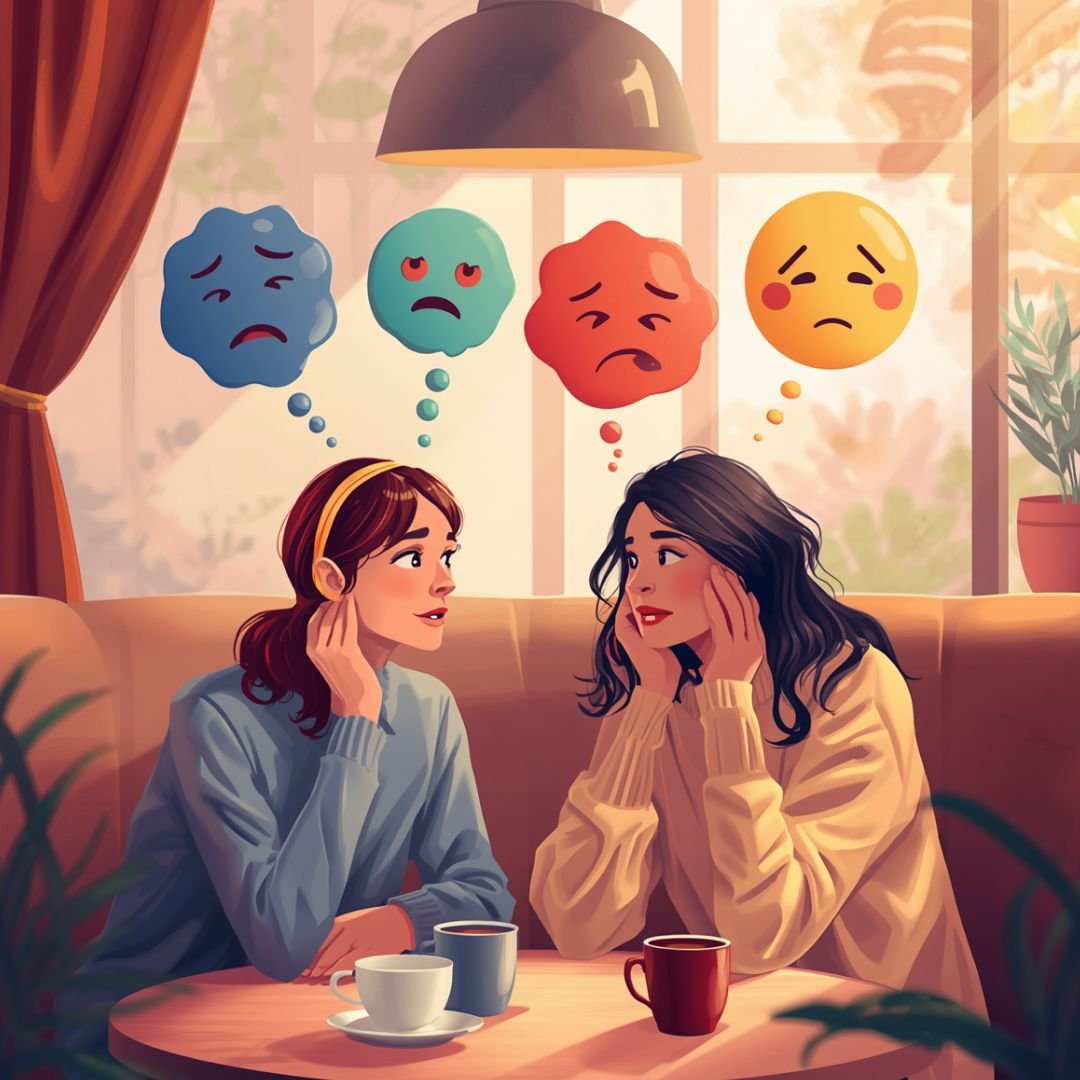
Nonviolent Communication (NVC) is a verbal and emotional communication skill that tries to foster connection and understanding between people through honest expression of feelings and needs.
Among other things, NVC trains people how to put into words their feelings and needs with an increased precision and accuracy. It also teaches people to make educated guesses about the feelings and needs of others.
A goal of NVC is to be able to articulate feelings as they are occurring.
People who practice NVC will sometimes use the term “what’s alive in me” to express the idea of tuning into emotions inside of themselves in the present moment.
Originated by the psychologist Marshall Rosenberg, NVC has concepts and practices that can be learned and used by anyone (which was Rosenberg’s intention).
Sometimes it helps to think of the guidelines of NVC like the rules of a card game
Another way to picture NVC is to think of it like an acting or movement technique.
People familiar with that technique get used to the ideas, practices and lingo.
In acting that might be:
Sense memory
Repetition
Objective
In NVC that might be
Feelings and needs guesses
Jackal and Giraffe
Empathy
In movement that might be:
Sets & reps
Sagittal plane movement
vinyasa
NVC, like acting, is something that can be learned
And, like acting, it is often practiced in small practice groups.
While an in-depth explanation of NVC is beyond the scope of this article, there are common patterns and challenges that can be noticed when people spend more time at it.
For example, practitioners of NVC often reach moments where they struggle (as most people do) with circumstances where their emotions overtake them.
Despite not wanting emotions to take over the moment, often they do.
People get triggered.
As this often prevents the kind of thoughtful, compassionate communication that NVC aims for (called Giraffe) practitioners often strive to better identify and express their feelings as they share what is alive in them.
In some cases, this can help people not get carried away by strong feelings.
Notice about Nonviolent Communication and NVC
The statements, comments or ideas about Nonviolent Communication (NVC), and the use of both terms in this article, reflect the author’s understanding, experiences and perspectives. He is not certified by nor affiliated with the Center for Nonviolent Communication. For information on the Center for Nonviolent Communication visit www.cnvc.org The website offers additional resources.
For more information about the author visit: mindbodyliteracy.com
What is The Sanford Meisner Acting Technique?
There are many styles of acting and performance.
For the purposes of this article we’ll look at mostly just one style.
The American acting community has a long history of aiming for emotional truth and psychological realism in performance.
In earlier eras, and in other countries and cultures, less weight was given to acting appearing truthful or real.
Even today, having a personal genesis for behavior, may or may not be the focus of an acting style.
However, many forces including:
the advent of modern movie making with sound
the adoption and American understanding of the work of a Russian acting teacher, Konstantin Stanislavski
The work of many American acting teachers and their students, for example, The Group Theater (1930s) and the Actors Studio (1940s)
created a strong leaning toward emotional realism that exists in the American film industry, American audiences and American performers today.
It is beyond the scope of this article to give an in depth description of the many permutations of acting styles that grew out of the American experience of Stanislavski, or to list the enormous number of styles and teachers that now exist in the USA in 2026.
The Sanford Meisner Acting Technique is an acting approach built around truthful reaction in the moment,
Sanford Meisner was one teacher who emerged from his experiences at the Group Theater to teach at the Neighborhood Playhouse in New York.
Much of Meisner’s work was aimed at creating realistic emotional connections.
Meisner helped actors get in touch with their own feelings, and the feelings of the other actor(s) they were working with.
But he did this indirectly by having actors notice behavior.

In an attempt to reduce actors’ tendencies to get caught up in self conscious thinking, Meisner developed an exercise called "The Repetition Exercise”
The goal was to have actors observe the emotional and behavioral shifts in their acting partner (and also inside themselves).
By repeating neutral statements (i.e Your shirt is green) Meisner technique seeks to get people to observe and focus on behavior and feelings, not the content of what is being said.
A common refrain in modern acting classes “Act before you think,” emphasizes that truthful, even impulsive, emotional expression is the goal of techniques like Meisner, NOT conversation that flows primarily from dry intellect.

Interestingly both NVC and Meisner Technique try to get people to express what they are feeling moment-to-moment truthfully - but for directly opposite reasons.
Below is a brief example of the Meisner Repetition exercise:
Person 1:
Observes what person 2 is wearing
“Your shirt is green.”
Person 2:
Observing how Person 1 is behaving and feeling
“My shirt is green.”
Person 1;
Continuing to observe and notice any shifts in behavior or emotion
“Your shirt is green”
Person 2:
Continuing to observe and notice any shifts in behavior or emotion
“My shirt is green.”
Person 1:
Observing an emotion in Person 2’s behavior
“You’re pleased with yourself.”
Person 2:
Observing any changes in Person 1
“I’m pleased with myself.”
Though the words are quite similar, it’s the emotion under them (the subtext) that is changing and evolving.
Watching such an exercise can be like watching a game of tennis as impulses and emotions bounce off the players.
In Meisner it’s fair game to change the words when a participant sees an emotional or behavioral shift.
But not to foster, or get lost in an intellectual conversation.

Nonviolent Communication also seeks to train practitioners to get better at identifying feelings and emotional impulses inside of them (and their partners) during a conversation.
But it does so for the opposite reason, so that practitioners do NOT get carried away by the emotional impulse
NVC tries to help people better organize and talk about their feelings. Among other things, it uses:
Feelings guesses
Making observations (in words)
Thinking calmly about what is happening inside themselves and others (needs guesses).

Note: Many NVC practitioners feel strongly that being in touch with what is alive in the moment (often emotions) is the core of the practice.
And that emotion or a certain state of feeling (awareness, or empathy) must be the starting point for conversation.
However, Marshall Rosenberg framed NVC as a language.
And inherent in the name of NVC is the word “Communication.”
Language and communication require words. (Unless you’re a good mind reader.)
And the human act of organizing language requires thinking.
Too much emotion can overwhelm thinking.
Too little emotion can turn into dry, intellectual conversation (as both Rosenberg and Meisner saw.)

Success in NVC often looks like authentic communication that expresses feelings and needs and is put into words and thoughts, while reducing occurrences of being taken over by feelings.
To simplify (and at the risk of oversimplification):
An actor often wants to be taken over by feelings and so tells the truth about what they are experiencing and feeling internally to get there.
An NVC practitioner does not want to be taken over by feelings and thoughts so tells the truth about what they are experiencing and feeling internally to get there.
An actor is trying to replicate real human behavior under dramatic circumstances which often involves people acting impulsively from emotion.
An NVC practitioner is involved in real life and their goal is often: connection, communication, empathy and understanding. Impulsive expression (as opposed to authentic expression) does not always foster these goals, and may detract from them.

So, why is bringing thoughts and feelings into awareness and expressing them truthfully helpful to people, even in directly opposite ways?
In day to day life, people are carrying thoughts and feelings that don't usually get expressed.
Most environments implicitly encourage and reward only certain parts of people.
And social interaction requires a certain amount of self editing and repression of impulses.

When people encounter a holding environment where more of their thoughts and feelings (especially conflicting or unsettled ones) can be expressed openly,
it’s not uncommon for people to report experiencing significant:
Relief,
Vitality,
Learning,
and Connection
These settings and environments serve as a container.
And they are notable for the presence of people who have the capacity to witness authentic expression, and receive it in a way that “holds the space.”
Such an environment is an important component for these types of experiences.
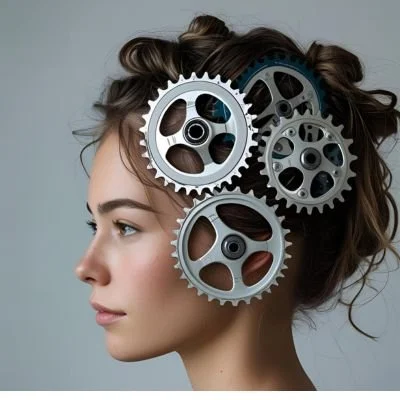
The environment supports the individual in being able to:
experience, make sense of, and reorganize, conflicting and confusing feelings and thoughts.
Such containers can be wide and varied:
an NVC practice group,
An acting class or theater,
a therapists office,
a healing or performing art (i.e. bodywork, breathwork, etc.)
Spiritual or religious groups
Confession or conversation with a member of clergy
A deep and open conversation with a friend
That’s why you can see versions of this principle in: acting, psychotherapy, good friendships, certain bodywork and movement practices, in teaching and learning settings, in creative writing groups, improv, spiritual communities, and many other places
What's interesting is that although the surface activities differ, the underlying mechanism seems remarkably similar.
Likely because this is a deeply human activity.
Many acting teachers aren't simply teaching "how to perform."
They're trying to create conditions where habitual defenses soften enough that an actor can respond more truthfully in the moment.
The performance improves, but the mechanism is about creating enough safety, attention, and challenge for something authentic to emerge.
In therapy, it's similar.
The goal isn't merely to talk about problems. It's to create a relationship where experiences that couldn't previously be thought, felt, or spoken can finally be held and integrated.
And there’s an interesting property to this process.
It has a feeling to it.
Perhaps as the writer Marianne Williamson pointed out, and to paraphrase:
As we witness other people being free (or being more fully themselves and expressing more authentically and fully)., we naturally start to pick up on all the places where we hold ourselves back.
There’s an appeal to emotional aliveness, which may be why performers and healers show interest in such states of being.
It’s worth noting, that there are conditions that are needed to evoke such states;
Enough safety so that people don't have to spend all their energy protecting themselves
Enough capacity, emotionally, intellectually, or both, so that what is expressed can actually be received and metabolized
Enough structure so that the expression becomes meaningful rather than chaotic.
Enough trust so that the individuals involved are willing to be open with each other.
A good acting class, a skilled therapist, a thoughtful discussion group, or even a good healing arts practice, doesn't just remove constraints.
It creates conditions where what's expressed can be explored, reflected on, and integrated.
How Bodies and Minds Organize Experience
Talking isn't just communication to another person.
It's also a way your own mind makes sense of your experience.
This may be key to understanding why truthful emotional expression is often experienced as helpful to people.
In his 1980 book A Way of Being, while talking about empathy, the psychologist Carl Rogers wrote:
“Being listened to by someone who understands makes it possible for persons to listen more accurately to themselves, with greater empathy toward their own visceral experiencing, their own vaguely felt meanings.”
”
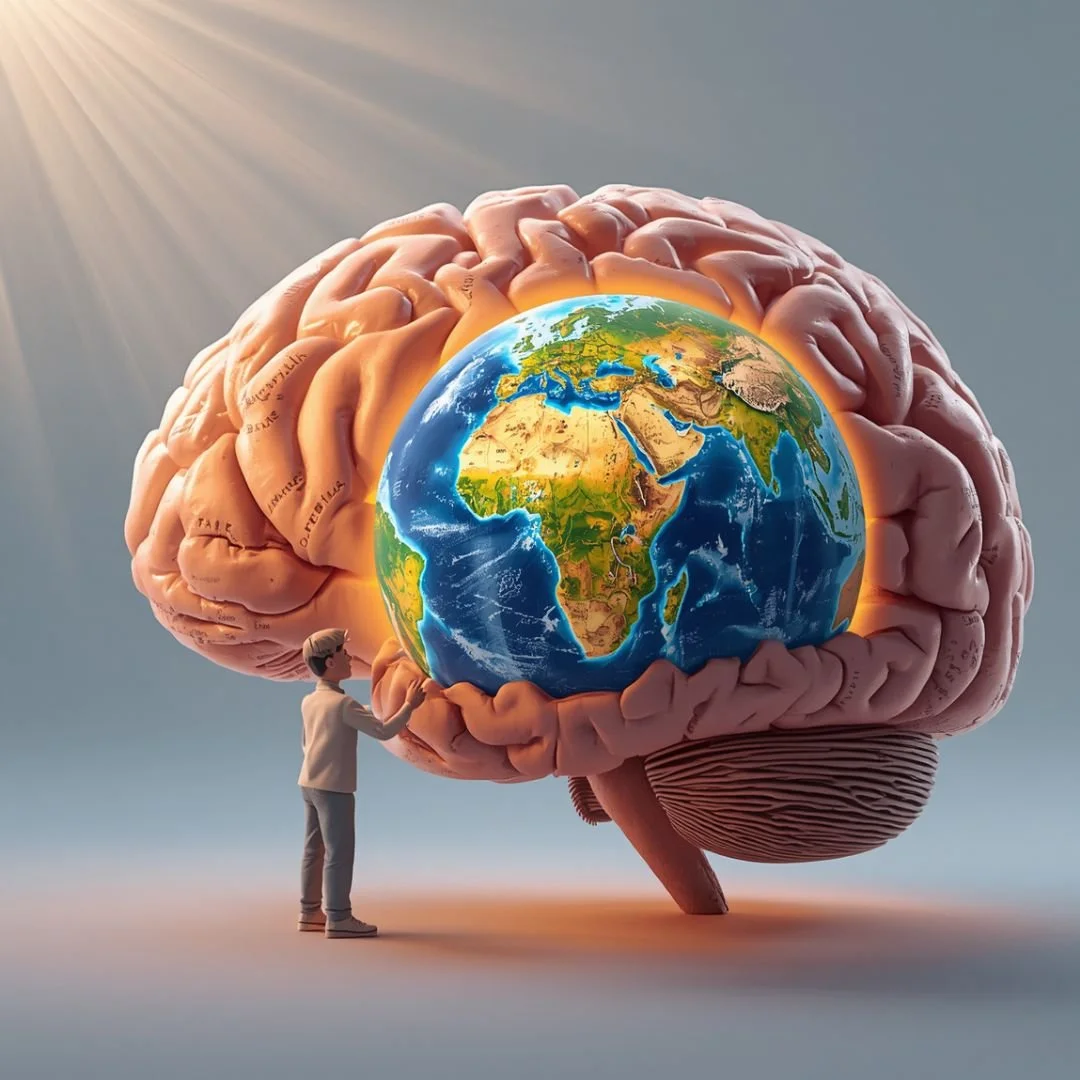
It is through being able to express, and viscerally experience, and reflect on expression, that
people create new understanding, and new models, of their internal and external worlds.
You might say truthful expression of internal thoughts and feelings, combined with the ability to reflect on it, is a form of mental and emotional strength training (or flexibility training).
It’s what allows people to increase their capacity.
To deepen the nuance with which they understand both what is happening inside and outside of themselves.
It helps people update and refine the mental models they have about the world and themselves.
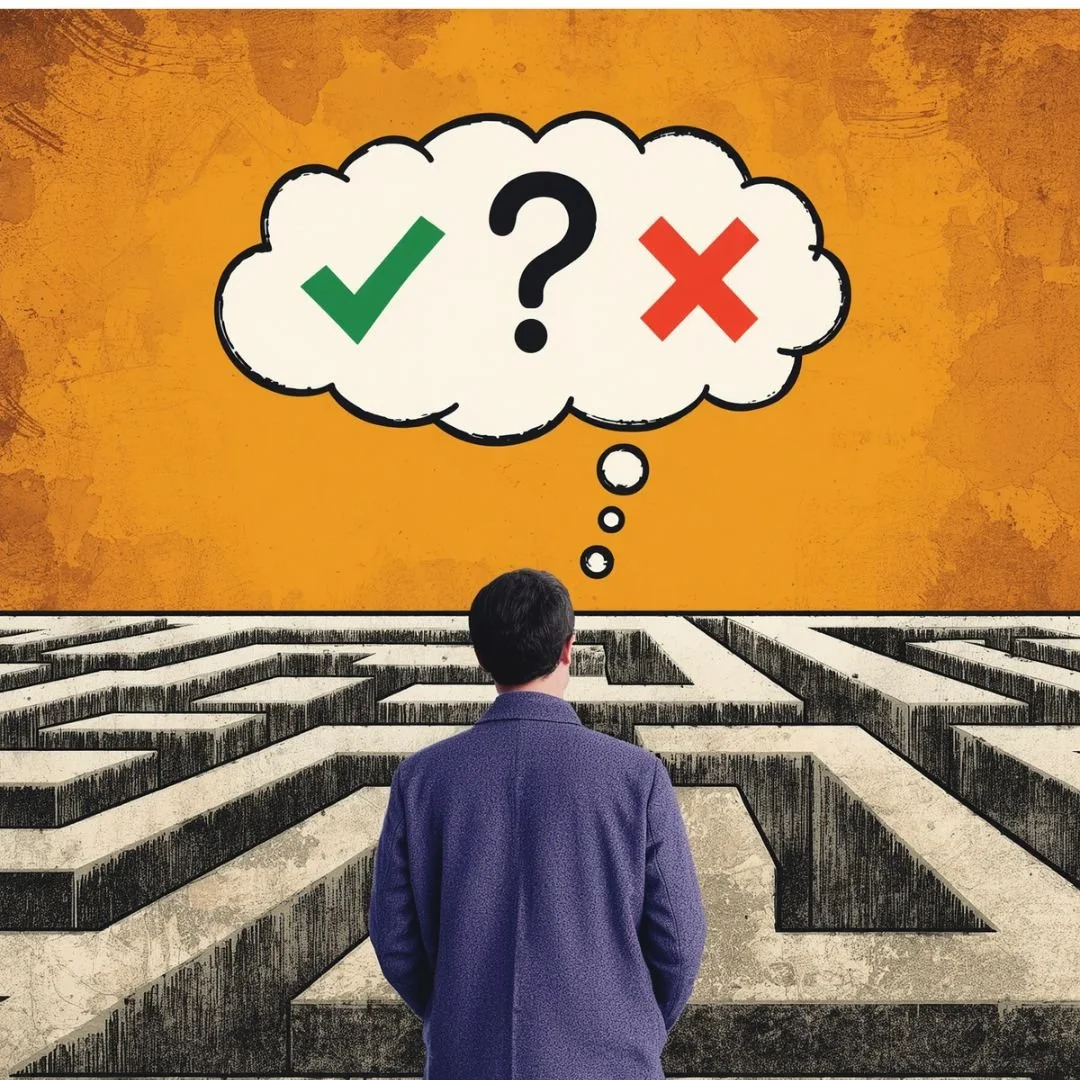
It’s these mental models which impact how they interpret situations
AND the repertoire of behavioral choices a person has.
What’s Happening Right Now?
In acting, once the emotion is alive, the actor is often free to stop thinking about themselves and pursue the character's objective.
The emotion fuels action.
In NVC, once the emotion is recognized, attention often can shift toward identifying the underlying needs, and then the best strategies to meet the needs and preserve connection and the relationship.
The emotion informs both need awareness and communication.
So the emotion serves different ends, but in both cases it becomes more usable because it has first been honestly recognized.
Human beings seem to have an ability to monitor themselves, to notice sensations, emotions, thoughts, impulses, and needs.
When that monitoring is accurate, the whole system often functions better, regardless of the goal.
Whether you're an actor, mediating a conflict, talking with a therapist, improvising in Meisner, or even making a difficult life decision, the first move is remarkably similar
What is actually happening in me, right now?
Much seems to build from that.
The Body and Mind as an Information System
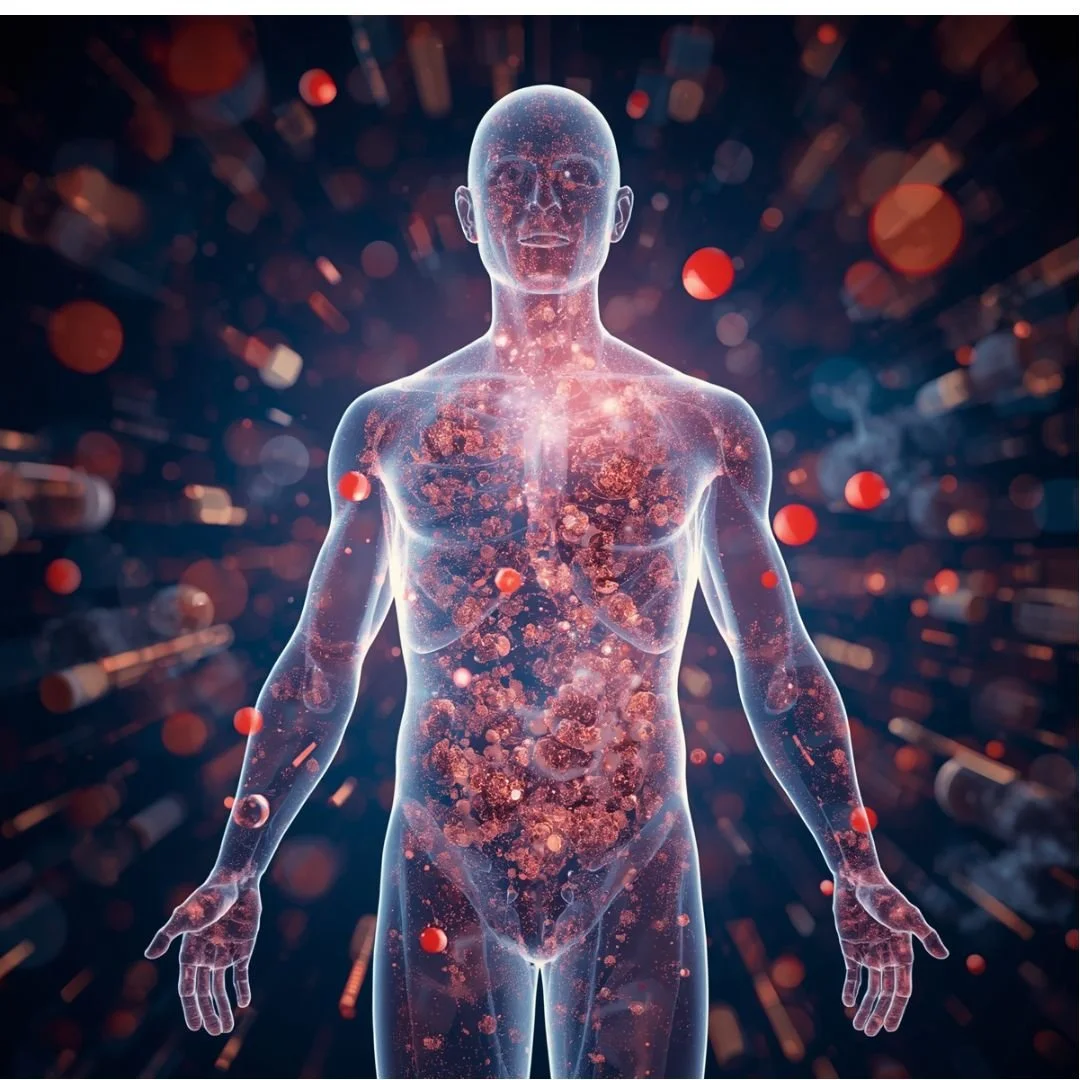
Right now as you read this your body is processing a tremendous amount of information.
In fact, we might look at the body as an information system.
One whose goal is to predict what is happening and then adapt effectively to it.
If you ate some food recently, or even if you didn’t, your body is using that information to decide things like:
How to break down food into different molecules
How to transport dietary fat out of your stomach and intestines into your lymphatic and circulatory system (one of the roles of cholesterol and other lipoproteins)
How to release insulin to absorb carbohydrates into your cells or store it in your liver.

If you just stood up, from sitting or laying down, baroreceptors in your neck are in communication with many other systems and are deciding how fast to increase the beating of your heart to get blood from your legs to your brain
If you cut yourself chemical signalling proteins like cytokines are communicating in complex ways to create inflammation, clear debris and start the repair process.
Moment-to-moment your cells are communicating how to replicate themselves, recreate cellular membranes, copy DNA, and turn on and off certain genes depending on the chemical orchestration inside of you.
Our bodies are marvels of biochemical signals being sent to orchestrate complex functions.
Recent experiences like the world pandemic points out how things like a virus get inside cells and create different signals.
Other things that send signals to cells include: medicines, mechanical tension and food.

The scientist Candace Pert, who discovered the opiate receptor in the brain (one place where some “feel good chemicals” go to “dock” with brain cells,)
wrote at length in her book Molecules of Emotion about how biochemical signals likely play a role, not only in our complex body functions and physiology, but also in how we feel emotions.
Though written years ago, the book effectively points out that the body operates as a feedback system, and accurate feedback is crucial to healthy function.
After all, we'd be in a lot of trouble if our heart and lungs operated completely independently of each other.
Or if our muscular system couldn’t respond to our nervous system.
Fortunately things operate in a collaborative way taking into account what other parts of the system (from chemical to cellular) are doing.
What is fascinating about the human body is that not only does it integrate information about blood pressure, temperature, acid/base levels, metabolic function, moment-to-moment, but the same system helps organize our mental and emotional experience of the world.
Whether we feel embarrassed.
What we think silence means. And how comfortable or uncomfortable we are with it.
Many things inside and outside of us can change how the body feels.
So too with the mind and emotions.
And one thing that can change how we feel and think, how our system is organized moment-to-moment, and over the long haul, is new information!
Below you will see how just one sentence can completely change what your mind can perceive.
The Brain (and Body) as a Prediction Machine
As we’ve seen, the body has to be able to predict what is happening inside of it and outside in order to be able to adapt.
The same can be said about the brain.
In a fascinating Ted Talk by neuroscientist Anil Seth, Seth talks about how one important role of the brain is to predict what is happening in the outside world.
Spoiler Alert: Do not skip ahead in the Ted Talk! Listen from the start, if you want to get the full effect of the cool experience of your brain predicting something in real time!
Seth asks the listener to put themselves in the situation of the brain.
You are inside a bony skull swimming in some cerebrospinal fluid.
It’s dark.
You can’t see anything.
And you have to help organize a whole human being.
So your job is to make your best guess as to what is happening in the outside world and how to respond to it.
The brain combines incoming signals with past experiences and beliefs to make guesses about what is happening (and what options there are for action).
Your past experiences and beliefs up to this point are part of how you understand and interpret the present moment.
The best part of the presentation is where Seth shows this in real time.
He plays a sound recording that can not be understood by the listener.
He then adds one piece of information, and plays the recording again.
And now the listener can clearly understand the recording!

He uses this example, and the talk, to show how the brain doesn’t perfectly see or record reality, but rather
makes its best guess, or prediction, about what is taking place - often based on what it learned in the past.
Learning in Layers
In order to be able to better understand and predict the world around us we have to learn.
And often we learn in layers.
Almost everything we learn as human beings from not pooping in our pants, to how to make polite social conversation, to religious customs are learned behaviors.
We aren’t born knowing these types of things.
And as time goes by we create more nuanced models of the world around us.
For example I’ve known people who came from countries where they never saw or experienced snow.

Upon seeing a few inches of snow on the ground for the first time, they asked:
“Is it possible to walk on it?”
I’ve met people from other countries who have asked “ Which religion believes in Jesus?”
And I’ve had friends who have no idea what the rules are for American baseball.
Just like speaking a language, if we don’t grow up with something, we may not know anything about it until we encounter it.
Often it is not just outside events or experiences that we learn, but also internal ones.

How much money is enough?
What is responsible behavior?
Is it better to be helpful or look out for yourself?
What is honor?
How do you deal with problems?
Not every question we encounter has a clear answer like: is it possible to walk on snow?

The first time I learned about boxing I didn’t know that there are two types of gyms. Some that teach boxing primarily for exercise and fitness.
And some that train people in the real craft and sport of boxing so that you can actually perform inside a boxing ring.
Later on I learned that there are different stages to the skill building process.
And differences between: boxing coaches, boxing styles and training protocols.
As my understanding grew in nuance, the way I saw boxing, and the choices I had available about how to train, and how I thought about that in my mind, changed.
And so did my skill level and the boxing “behaviors” available to me.

People do not learn a new language, a new behavior, or a new concept all at once.
Increased mental and emotional understanding is a process of gradual accumulation of insight and experience.
Just as it takes time to learn a new skill, like boxing, it takes time to learn a new way of seing and understanding the world.
My model of boxing started off very crude and gradually grew more nuanced.
What happens when the model people are using does not have enough nuance to match the complexity of the world around them?
The Growing Edges
People grow by encountering new organizations of information.
But before that increase in capacity happens there is a growing edge where they can only “lift” a certain amount.
When people try to physically lift things that are heavier than their current level of strength, the struggle can be observed.
They might sweat.
Their muscles might tremble.
Or they might give up.
So what happens when people are at their mental or emotional growing edge? The edge of their ability to understand the world around them or inside of them?
Can you walk on snow?
Why do I feel X?
How do I do Y?
Confusion is often present.
Maybe some degree of worry or distress.
People don’t always know what to do.
Go back to the garage?
Or take a step out onto that white stuff?
I’ve known people from cultures where they weren't allowed to practice religion.
After moving to countries with religious freedom those same people felt very confused about how to even relate to the question of religion.
As people develop, the experiences they haven’t had, or the ones they did have, can very much shape their model of the world around them.
And that, in turn, impacts what options for action they see.
Why is bringing internal experiences into awareness and expressing them truthfully helpful to people?
Creating New Models of the Inner and Outer World

One reason bringing feelings and thoughts into awareness, and expressing them truthfully, can be helpful to people is because it is the process by which they are able to make sense of aspects of experience they don’t yet have a model for.
It helps them redefine, reorganize and build more nuance from their growing edge.
When we want increased physical strength we can lift weights.

When we want increased mental and emotional capacity we can express how we have encoded our understanding inside ourselves, by talking about the emotions, physical sensations, and thoughts we are experiencing.
We can then sometimes be open to new information that helps us create a new lens, a new understanding, or organization (like Anil Seth shows.). And that often leads to seeing new options and choices for behavior.
What an actor is doing when they are getting triggered by emotion is USING INFORMATION to create a reorganization of their state.
Because the body and mind are an information organizing system, whether for physiolgical function or mental and emotional function, new information, chemical or in words, can reshape what is taking place.
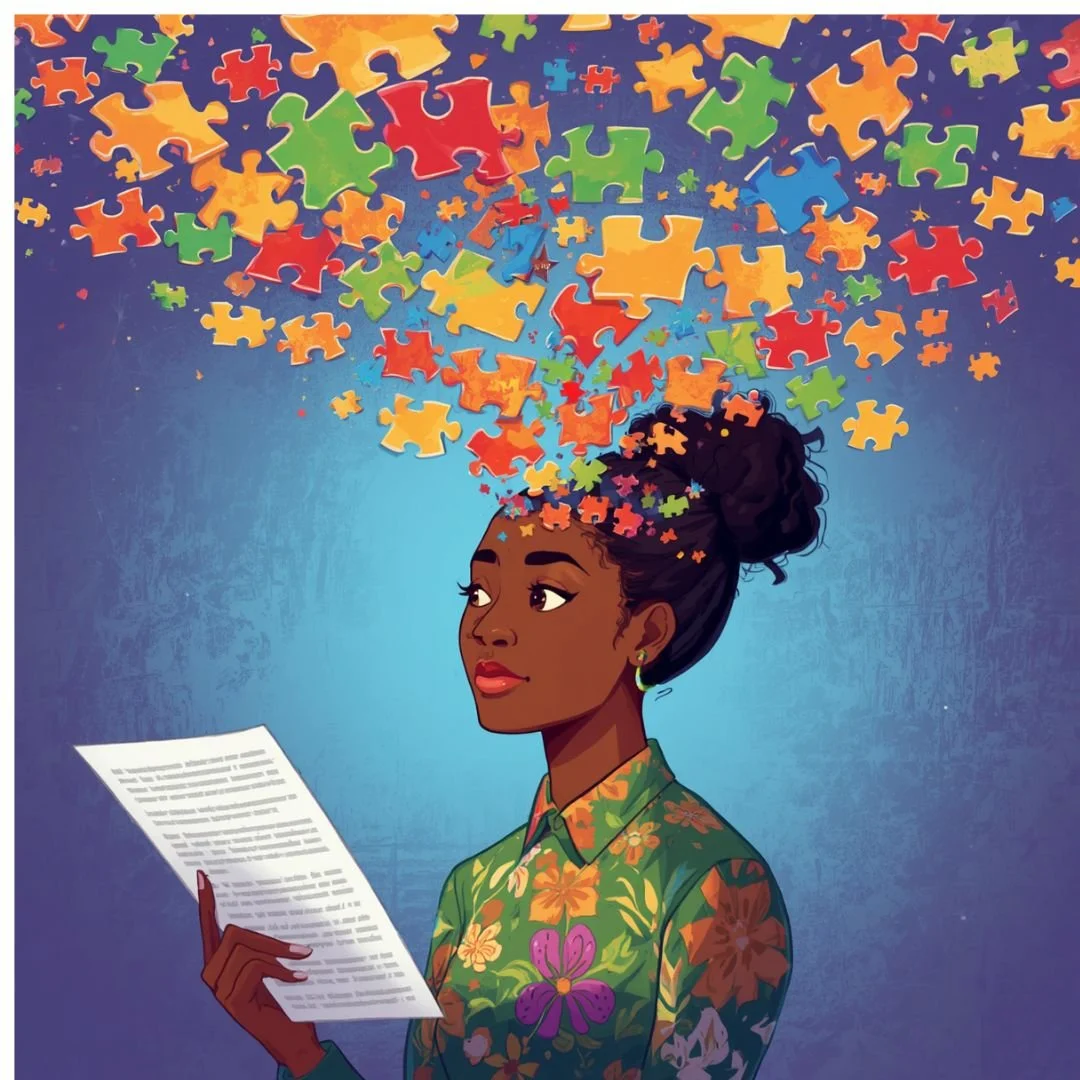
So when an actors starts to ask
Who is this character?
What do they want?
Where did they grow up?
Who are they talking to in this moment?
What happens if they don’t get what they want?
What the actor is doing is changing the mental, emotional and biographical information they are focused on to create a different organization inside their own physical and emotional state.
When an actor does an exercise and notices how they are feeling moment to moment they are similarly reorganizing their internal state by changing the focus of their attention.
When an NVC practitioner focuses on their feelings and needs they are changing the information available to them.
Tone.
Words.
Ideas.
Felt sensations - whether internal or external.
All of these can change how the mind and emotions organize themselves.
This is why NVC can be used to resolve conflict. It has the capacity, through word sand information, to change how people feel.
Someone says something harsh or demeaning to us and how we feel shifts.
Someone says something that seems to indicate they understand us and how we feel shifts.
We “feel” their “energy”. We hear their words and tone. We observe their behavior.
And we get better at using these signals to make observations and track what is actually going on.
Why Should Making Experience Explicit Change Anything?
It’s a fascinating question.
A person’s nervous system isn't just generating emotions, it is continuously trying to build a model of what's happening, both inside them and around them
Imagine a few different situations.
Your heart is racing.
Your stomach is tight.
Your shoulders are tense.
You have an impulse to leave.
If all of that remains an undifferentiated mass, your brain just knows, "Something is wrong."
Now compare that with:
"I'm anxious because I want this person to respect me, and I'm afraid I'm failing."
The physiology might not disappear, but now the experience has structure.
Different pieces have names and relationships.
You know the difference between a boxing gym for exercise and one that teaches you how to step into a boxing ring and compete.
That structure, and nuance, matters because action depends on it.
If you think you're angry when you're actually hurt, you'll probably behave differently.
If you think you're lazy when you're actually exhausted, you'll choose different actions.
If you think you're in danger when you're actually grieving, you'll organize your behavior differently.

So one answer is that the organization determines the response.
The prediction, interpretation and past experience determines what options you see.
If no one taught you to throw a combination, or distance and timing, you will be different in a boxing match than if you practiced that hundreds of times.
Still, Why does saying things out loud matter?
One possibility is that language isn't just a way of reporting experience, it helps stabilize them.
When you say,
"I feel disappointed."
you're not only informing someone else.
You're committing your own nervous system to a particular organization of what's happening.
Actors reorganize their nervous systems using fictional information!
And if another person understands and reflects your organization accurately, that organization becomes shared.
Now it exists in two nervous systems instead of one.
Expression isn't just output.
It's part of cognition.
The same may be true emotionally.
Humans are profoundly social learners.
An infant doesn't learn what they're feeling by introspection alone.
A caregiver says things like:
"You're startled."
"You're frustrated."
"You're excited."
Over thousands of interactions, the child's inner world becomes differentiated.
So perhaps expression into another mind is NOT an optional extra.
It may be one of the primary ways human minds organize themselves.
That would explain why we keep seeing this pattern:
therapy,
acting,
close friendship,
teaching,
mentoring,
conflict resolution.
All of them involve one mind helping another mind organize experience.
All of them are information feedback and organization systems that can help the mind and body change its state of organization.
Why Does It Matter How Our Mind Organizes Experience?
The nervous system exists to guide action.
It isn't enough to feel something.
The system has to decide:
Stay or leave?
Fight or cooperate?
Ask for help or solve it yourself?
Rest or push harder?
Speak or stay silent?
Those decisions depend on the model the mind has constructed.
If the model is crude, "everything is bad,” our options are crude.
If the model is nuanced, "I'm disappointed because this relationship matters to me, but I'm also hopeful because there are things I can still do,” your range of possible actions expands.
We approach physiology with the idea that organization matters. And current, moment-to-moment information is key to how the system organizes and functions.
This goes beyond biochemistry.
A pile of muscle fibers isn't movement.
A coordinated pattern of activation is movement.
The same muscles can produce a graceful handstand or a fall depending on how they're organized.
Perhaps the mind is similar
The "raw materials" - sensations, emotions, memories, needs - may not be the decisive factor
The way they're organized into a coherent, flexible model may determine what the whole system is capable of doing.
That would make truthful expression important because expression is one of the ways the mind reorganizes itself into a more coherent and usable pattern.
It turns an inchoate experience into something that can be thought with, acted on, shared, revised, and integrated.
And once it's organized differently, the set of actions available to you changes as well.
That's a remarkable property of human minds, and it would explain why such different practices keep converging on the same mechanism.
Why do practices as different as acting, therapy, coaching, movement training, and NVC all seem to produce similar changes in people?
Perhaps, in part, because they all change the way experience is organized by making it explicit and giving feedback
Complexity & Interconnection
This article has covered a lot of complex territory.
And yet one of its foundational ideas is that people grow by encountering increased complexity and new arrangements of concepts they have not seen or considered before.
And that the body itself works through complex systems of interconnection that allow for reorganization in real time.
People grow by building richer, more nuanced models.
Richer and more nuanced models don’t always come from one insight, but more often, require seeing the connection of several concepts..
Teachers see this all the time.
A beginner has one crude category.
An expert has twenty nuanced distinctions.
Not just boxing gym (crude category) , but different types of boxing gyms (nuanced categories).
Not just boxing, but the Philadelphia style or the Mayweather style
Good teachers continually ask:
What mistake are people making here?
Why is it such an understandable mistake?
What's the distinction they haven't seen yet?
Conclusion
At the edges of our growth, we may miss, reject, or simply not know how to handle something.
Later, with greater understanding and capacity for nuance, we may find that same experience has become more easily understood and handled.
As people, we can build more nuanced mental and emotional models by talking about our experiences, and by finding spaces for skilled holding of feelings and thoughts. Spaces that allow for the emergence of new insights and possibilities.
Models are tools for helping people navigate the world, individually (as in acting), and collectively (as in NVC).
When previously unorganized internal experiences become available for awareness, expression, feedback, and reorganization, in a space that can “hold it” people often grow and develop.
Simple mental and emotional models become more nuanced. And, therefore, the number of behavioral options available to people increases.
This is the basis of skill. More options. More nuance. More ability to respond flexibly while staying tethered to the reality of the unfolding moment.
The more we are able to explore and refine our models the more we may find greater ease and accuracy in our travels through the journey of both inner and outer life.
This article, then, seeks to create a model for a process that many people experience but often cannot articulate.
Human development happens when new organizations of information become available.
And this also can change mental and emotional states.
The body and mind can be looked at as an information organization and prediction system.
Article Preface - Older Version
Compassionate models of human development have to consider that human beings have mental and emotional limits. All people have limits to what they understand.
This is not that different from human beings having physical limits.
For example, how much weight an individual can lift, whether in or out of the gym.
The training for increase in physical strength is called strength training.
Strength training involves a structured plan, over weeks and months, for lifting increasingly heavy objects.
But how do human beings increase their mental and emotional strength and flexibility?
Both what they understand and their capacity to understand greater nuance and complexity?
While human bodies move, in part, by creating physical maps of self and space, human minds move through the world by interpreting self and the world around it through mental maps.
All models (including ones about the mind and body) are limited.
A map of the New York City subway system doesn't show trees, restaurants, or elevation.
It's "wrong" in thousands of ways.
But it's enormously useful if you're trying to get from Greenwich Village to the Upper East Side without a car or taxi.
In this article, let’s use a model of the human mind and body as an information organizing and prediction system and use that model to take a look at one possible perspective on this question.
But first let’s take a look at two different practices; Nonviolent Communication and Acting.
Nathan Schechter, ACSM CPT, writes about the mechanics of experience - how people learn, change, connect, and perform under real conditions.
Disclaimer
The information and content provided by Mind Body Literacy and in this article is general information and is intended for educational purposes only. Individual situations vary. This content is not intended as, nor should it be used as a substitute for, professional medical or psychological advice, diagnosis or treatment. No guarantee or warranties are made with respect to the accuracy, applicability, fitness, or completeness of the content.